
First Model Train Layout Tips: A Practical 2025 Playbook for Beginners
Posted by William Jeffries on 31st Dec 2025
Order by phone: 763-231-7847
Free Shipping On Orders Over $100!
If you are already registered, please log in.
Create your account and enjoy a new shopping experience.
Create A New AccountPosted by William Jeffries on 31st Dec 2025
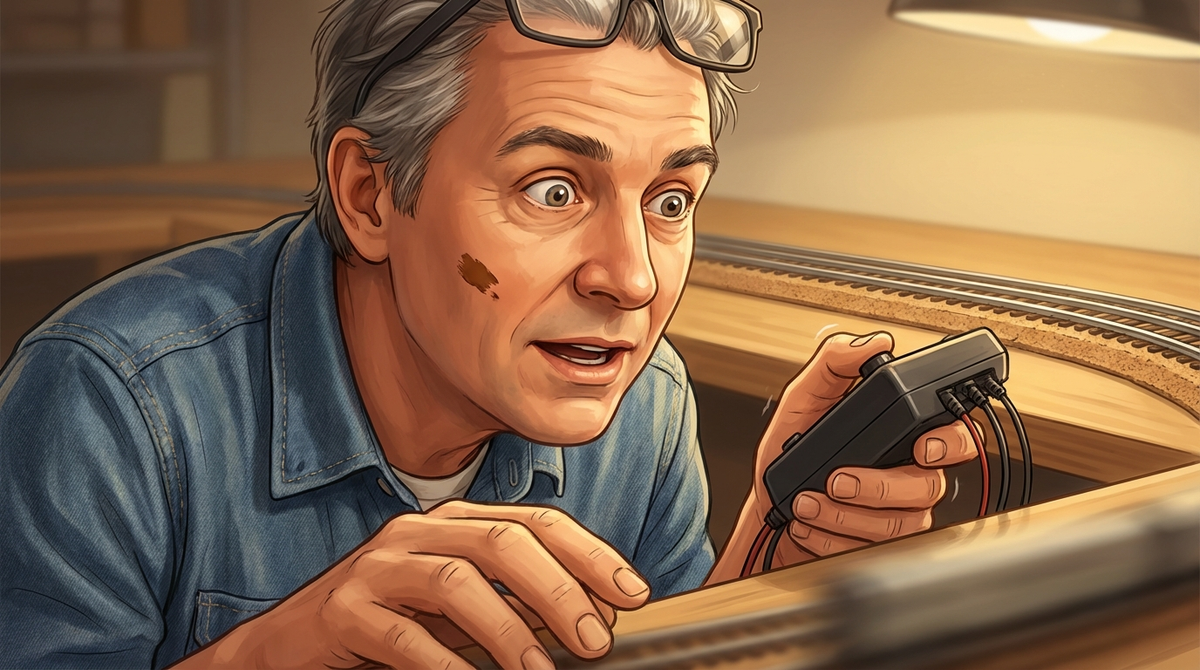
I bought my first Broadway Limited locomotive in 1989, set it on a borrowed loop of track, and immediately realized I had no idea what I was doing. The locomotive ran beautifully. The track? A disaster of wobbly joints and dead spots. Thirty-five years later, I've learned a few things about what separates a layout that runs from one that becomes an expensive dust collector.
My own HO scale Pennsylvania Railroad has been "almost finished" since 2014. I tell you this not as a confession, but as a credential. I've made most of the mistakes you're about to make, and I've watched countless beginners at the Railroad Museum of Pennsylvania make them too. Here's how to avoid the worst of them.
The single most expensive mistake in this hobby isn't buying the wrong locomotive or choosing the wrong scale. It's designing a layout that exceeds your available time, space, and budget. I've seen it happen dozens of times: someone plans a magnificent empire, builds a quarter of it, gets frustrated, and abandons the whole thing.
The NMRA's beginner guide recommends starting with something manageable. For HO scale, that typically means a 4x8-foot layout. For N scale, a hollow-core door layout (roughly 28 by 80 inches) gives you room to learn without overwhelming you.
This isn't about limiting your ambitions. It's about finishing something. A completed small layout teaches you more than an incomplete large one, and you can always expand later or start fresh with hard-won knowledge.
Scale determines everything that follows, so this decision deserves careful thought. HO scale (1:87) dominates the global market for good reasons. The models are large enough to show fine detail and easy to handle, yet compact enough to fit meaningful layouts in most homes. Brands like Kato, Atlas, Athearn, and Walthers offer an enormous selection.
N scale (1:160) offers a different trade-off. You can build a more expansive layout in a smaller space, making it ideal for apartment dwellers or anyone wanting to model long trains through vast landscapes. Modern N scale equipment from manufacturers like Kato and Micro-Trains matches HO for detail and reliability.
If you're in the UK, OO scale is the practical choice. Models from Hornby and Bachmann dominate the market there, running on 16.5mm gauge track shared with HO.
Beyond scale, regional standards affect your choices. In the US, Kadee-compatible knuckle couplers are the standard. In the UK, most models come with tension-lock couplers, though NEM 362 coupler pockets allow easy upgrades to Kadee's NEM-compatible series.
Power supplies also vary by region. A controller designed for 230V UK outlets won't work properly in the US, and vice versa. A simple plug adapter isn't enough; you need equipment designed for your local voltage.
Here's where beginners get burned. A locomotive might navigate a tight curve just fine, but hook a string of cars behind it and watch the derailments begin. Poor track geometry causes more first-year frustration than any other factor.
The rule is simple: your minimum curve radius must accommodate your longest equipment. For HO scale, 18-inch radius curves come in most starter sets, but 22 inches works better for modern diesels. If you want to run 85-foot passenger cars, you'll need 24 inches minimum, with 28-36 inches preferred.
In N scale, 11-12 inches is the common suggestion for reliable operation. Japanese prototype equipment often requires at least 282mm (about 11 inches).
| Scale | Starter Set Radius | Recommended Minimum | For Long Equipment |
|---|---|---|---|
| N (1:160) | 9.75" | 11" | 15"+ |
| HO (1:87) | 18" | 22" | 24-30"+ |
| OO (1:76) | 17.2" (438mm) | 17.2" | 22.5"+ |
| O Gauge | O-36 (18" radius) | O-54 (27") | O-72+ (36"+) |
| G Scale | 600mm (23.6") | 780mm (30.7") | 1200mm+ (47"+) |
Before you permanently fix any track, test your longest and most challenging equipment on all curves. Do this before scenery. Do this before ballast. Just do this.
You have two main choices for track, and both work well for beginners.
Integrated roadbed track (like Kato Unitrack, Bachmann E-Z Track, or Atlas True-Track) comes with a pre-molded plastic roadbed. Pieces snap together quickly, making it ideal for getting trains running fast. The UniJoiner connections provide reliable electrical and physical contact.
The downside? It can look toy-like without additional weathering, and you're limited to the manufacturer's geometry. Custom ballasting helps, but you're still working within constraints.
Flex track comes in 36-inch sections you can bend to any radius. This gives you flowing, realistic curves and fewer rail joints to cause problems. It costs less per foot than roadbed systems.
The trade-off is labor. You'll need to install separate roadbed (cork or foam), cut and shape the track, and ballast everything yourself. PECO Streamline, Atlas Super-Flex, and Micro Engineering all make quality flex track.
My recommendation for a first layout? Atlas True-Track in HO or Kato Unitrack in N. Both provide reliability while you learn, and True-Track sections can be removed from their roadbed for use on a future flex-track layout.
Turnouts (the proper term for switches) come in numbered sizes. A #4 turnout diverges at 1 inch for every 4 inches of length; a #6 diverges more gently at 1 inch per 6 inches.
Smaller numbers mean sharper angles and more derailments with long equipment. For mainline use, #6 or #8 turnouts work well. In yards and industrial spurs where you're moving single cars at slow speeds, #4 or #5 turnouts save space.
One more thing: avoid placing turnouts in tunnels or hard-to-reach areas. They're mechanical devices that will eventually need maintenance.
The frog is where rails cross inside a turnout. Three main types exist:
I started in DC and made the switch to Digital Command Control in 2003. I wish I'd done it sooner.
With DC (analog) control, you vary the voltage to the track to control speed. Run two trains? You need complex block wiring with toggle switches to isolate each locomotive. It works, but the wiring gets complicated fast.
With DCC, constant voltage goes to all tracks. Digital commands tell each locomotive's decoder what to do. You can run multiple trains independently on the same track, control lights and sound separately, and wire your layout with just two wires running everywhere.
The cost barrier to DCC has disappeared. A basic DC power pack runs $60-90. For $180-200, you get a DCC system that does vastly more.
| System | Price | Amperage | Best For |
|---|---|---|---|
| NCE Power Cab | $185-200 | 2A | Small-medium layouts, excellent programming |
| Digitrax Zephyr Express | $180-190 | 3A | Beginners wanting expandability |
| Bachmann E-Z Command Plus | $170-290 | 1.5A | Simple, small layouts |
| ESU CabControl | ~$400 | 7A | Premium wireless from the start |
| Roco z21 start | ~$230 | 3A | European modelers, smartphone control |
A 2-3 Amp system can run 4 HO or 8 N scale locomotives comfortably. Both the NCE and Digitrax systems expand easily as your layout grows.
Here's a truth that took me too long to learn: rail joiners are for alignment, not power. Relying on them for electrical conductivity is a recipe for dead spots, stalling locomotives, and endless frustration.
Run a pair of heavy-gauge bus wires (14-16 AWG) underneath your layout. Use two different colors. Then solder smaller feeder wires (20-22 AWG) from the bus to the track at regular intervals.
How often? Every piece of track is ideal. Every 3-6 feet is the minimum. More feeders equals fewer problems.
For DCC layouts, test your short-circuit protection with the Quarter Test: turn on the power and place a coin across the rails at various points around your layout. The system's breaker should trip instantly everywhere. If it doesn't somewhere, your wiring there is inadequate.
Your benchwork doesn't need to be fancy, but it does need to be flat, stable, and accessible. The NMRA recommends keeping reach-in depth to 30 inches maximum if you only have access from one side. Anything deeper becomes impossible to rerail cars without climbing on the layout.
For aisles, 36 inches works for multiple operators. You can squeeze by with 24 inches for a single person, but it gets tight.
Layout height depends on your preference and your back. 42-52 inches puts the action near eye level while keeping maintenance accessible. Mock up a section before committing.
Hollow-Core Door: A standard 80-inch interior door on sawhorses gives you a fast, cheap, rigid surface. Great for N scale or small HO switching layouts. The downside? Cutting large openings compromises the structure, and creating scenery below track level is difficult.
Open Grid: A grid of 1x3 or 1x4 lumber topped with plywood or foam. Sturdy, provides finished edges for fascia, and allows for varied terrain. The classic choice for 4x8 layouts.
L-Girder: Two L-shaped beams support movable cross-members. Extremely flexible for free-form layouts with flowing curves. Overkill for a simple first layout but worth knowing about.
A modern approach uses extruded-foam insulation board as your primary scenery base. The pink, blue, or yellow stuff from the hardware store is lightweight, easy to carve, and dampens sound. Glue it to any benchwork style using foam-safe adhesive like Loctite PL 300 or latex caulk.
My first attempt at scenery involved way too much plaster and a memorable argument with my wife about the kitchen table. Modern methods are lighter and cleaner.
Ballast transforms plastic track into something that looks like a real railroad. It can also permanently destroy your turnouts if you're careless.
The NMRA's ballasting guide is clear: keep ballast out of moving parts. That means nothing between the switch points and stock rail, nothing around the throw bar, and nothing in the flangeways around the frog.
Work in small sections. Apply ballast dry, groom it with a stiff brush, then wet it with water containing a few drops of dish soap. Drip diluted white glue (about 1 part glue to 4 parts water) until saturated. While drying, move the turnout points back and forth periodically to prevent them from being glued in place.
A layout that only runs trains around a loop gets boring fast. Purposeful operation keeps things interesting.
Don't reinvent the wheel. These proven designs balance continuous running with switching interest:
Unrealistic budget expectations kill layouts. You don't need to spend a fortune, but you do need to spend wisely.
A practical starting budget for a small HO or N scale layout falls in the $500-1,500 range. A rough allocation: 35% for benchwork, tools, and track; 30% for power/control; 25% for a locomotive and cars; 10% for basic scenery.
Savings come from the used market for rolling stock and structures. Train shows and consignment shelves offer 30-50% off on equipment that works fine.
Most operational problems trace to dirty track and wheels.
Avoid sandpaper and harsh abrasives; they scratch rails and attract more dirt. A soft cloth dampened with 90%+ isopropyl alcohol handles routine cleaning. For stubborn grime, contact cleaners like CRC 2-26 or DeoxIT work well and inhibit future oxidation.
Place a paper towel dampened with alcohol over powered track. Hold the locomotive so one truck's wheels spin on the towel while the other picks up power.
Better yet, upgrade rolling stock from plastic to metal wheels. Plastic wheels accumulate static, attract dirt, and spread it everywhere.
Modern locomotives need very little lubrication. Over-lubricating attracts dirt and can damage motors. Use only plastic-compatible hobby lubricants like LaBelle. A tiny drop on motor bearings and a small dab of grease on gears is all you need, and only when necessary.
Kato locomotives are particularly known for running years without lubrication.
The fastest way to learn is from people who've already made the mistakes. The NMRA offers a structured beginner's guide, standards that keep equipment interoperable, and local divisions with meetings, clinics, and layout tours.
The Achievement Program provides structure for building skills. The Golden Spike Award specifically targets beginners building their first operable layout.
Modular railroading offers a low-risk entry point. Instead of building a full home layout, you build standardized modules that connect with others at shows:
My layout has been almost finished for eleven years now. I add a little each year, fix things that break, and run trains with my grandkids when they visit. It's never going to be done, and that's fine. The point was never perfection. The point was having something that runs reliably and brings joy.
Start small. Test everything before you commit. Wire it right the first time. And when you make mistakes, and you will, know that every experienced modeler has a story about the time they glued their turnouts shut or forgot to leave access to that one spot behind the mountain.
Welcome to the hobby.
✨ Complete Your Layout: Explore our wide selection of Photo Real buildings, diorama backdrops, detail parts, and accessories in every popular scale.
✨ Unmatched Realism: From chrome detailing products to neon lighting kits – every piece is designed to make your miniature world come alive.