
TT Scale Trains European Models: A Practical Guide to the 1:120 Renaissance
Posted by Gerald Hoffmann on 31st Dec 2025
Order by phone: 763-231-7847
Free Shipping On Orders Over $100!
If you are already registered, please log in.
Create your account and enjoy a new shopping experience.
Create A New AccountPosted by Gerald Hoffmann on 31st Dec 2025
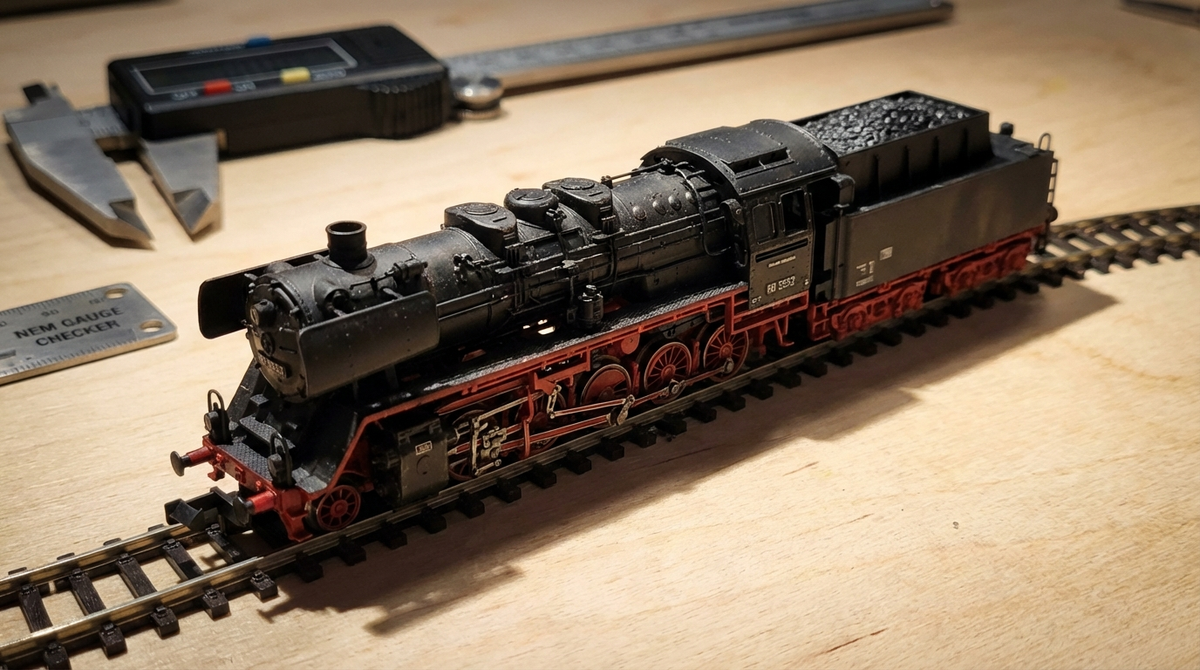
I've spent three decades modeling Great Northern and Northern Pacific in HO scale, so when my buddy Hans from the Lake Superior Railroad Museum started raving about TT scale trains, I figured he'd lost his marbles. Why would anyone abandon the massive selection of HO for some oddball scale I barely remembered from the 1960s?
Then I saw his layout. A complete mainline operation with passing sidings, a yard throat, and a gorgeous German station scene-all crammed into a space smaller than my workbench. The detail rivaled my HO stuff. The trains ran smooth as silk. And he'd built the whole thing in his apartment's spare bedroom.
That got my attention. So I started digging into what's happening with European TT scale models, and let me tell you-this isn't your grandfather's niche hobby anymore. Something big is brewing in 1:120.
TT stands for "Table Top," and the name tells you everything about its original purpose. We're talking 1:120 scale on 12mm gauge track-right between N scale's tiny 1:160 and HO's 1:87. The NEM standards from MOROP govern everything from wheel profiles to coupler dimensions, which means equipment from different manufacturers actually works together.
Now, if you're scratching your head wondering about the old British "TT3" stuff, that's a different animal entirely. The Tri-ang TT3 from 1957 used a 1:101.6 ratio-basically an oddball scale that never matched anything. Modern TT:120 follows international NEM specifications, which means your German Tillig locomotive will happily run alongside British Hornby coaches without drama.
The NMRA also recognizes TT scale with compatible wheel standards. We're not talking about some rogue operation here-this is a fully standardized system backed by both European and American organizations.
Here's what separates TT from your other scale options:
That last point surprised me. The NEM 358 coupler pocket is identical to N scale's NEM 355, which opens up some interesting possibilities for sourcing parts.
Every scale has an origin story, and TT's starts in Hartford, Indiana. Hal Joyce formed H.P. Products in 1945 and started selling his "Table Top" trains in 1946. His timing was perfect-by 1947 he was shipping EMD E7 diesels and streamlined passenger cars that looked stunning for their era.
The October 1946 announcement in American model railroading circles promised the smallest commercially available gauge. Joyce's concept was simple: give modelers HO-style detail in a footprint they could actually fit on a dining room table.
But here's where the story gets interesting. While American TT faded in the 1960s (killed off by the N scale boom), the scale found a second life in Germany. West Germany had Rokal, which started TT production around 1947, and East Germany developed what became the scale's true stronghold.
Zeuke & Wegwerth announced their TT models at the 1957 Leipzig trade fair, and the scale took off behind the Iron Curtain. Space was precious in East German apartments, making TT's compact footprint genuinely practical rather than just convenient.
The state eventually nationalized the operation into VEB Berliner TT-Bahnen (BTTB), which became a mass producer for the entire Eastern Bloc. When the Berlin Wall fell and German reunification happened, MATTRA acquired BTTB's assets in October 1993, eventually becoming the Tillig we know today.
That unbroken production history matters. Unlike American TT, which essentially died and would need resurrection, European TT never stopped. Tillig has been producing TT in Sebnitz since 1994, building on decades of accumulated expertise.
Something shifted in 2022. After years of TT being a Central European specialty, the British market suddenly jumped in with both feet.
Hornby announced TT:120 on October 10, 2022-the first new model railway scale introduced in Britain in 50 years. Design work had actually started back in 2017, so this wasn't some hasty cash-grab. They'd talked to hobbyists, identified the gap between "N is too small" and "I don't have space for HO," and built a complete system to fill it.
The initial rollout included 'The Scotsman' and 'The Easterner' train sets, and both sold out fast. 'The Easterner' became a bestseller by 2023. The British market, which had ignored TT for decades, suddenly couldn't get enough.
Then came the bombshell from the continent. In autumn 2023, Roco acquired Kühn Modell & Digital's entire TT range. This wasn't a minor licensing deal-Roco grabbed 27 product families and Kühn's established track system in one swoop.
The deal instantly made Roco the second-largest TT player behind Tillig. Their 2024 catalog promised over 50 models, with more coming. Roco now offers a complete TT track system alongside their locomotive and rolling stock ranges.
When a major manufacturer like Roco goes all-in on a scale, that's a signal worth paying attention to. They're not gambling-they're responding to genuine market demand.
Let's talk space, because that's where TT really shines. I've been modeling in HO for decades, and my layout room measures 20 by 14 feet. Most hobbyists don't have that luxury.
A four-coach express train in TT measures roughly 80-90 centimeters. You can run a prototypical passenger operation on a 2.0 x 1.0 meter baseboard-try that in HO, and you'll be limited to shunting a single car.
The TT scale sits perfectly between HO and N. You get better detail than N (those tiny figures actually have faces), but you're not surrendering your spare bedroom to the hobby. My buddy Hans fits a continuous-run mainline with a proper station and passing sidings in a space I'd struggle to fit an HO branch line terminus.
Space savings translate to real dollars. Smaller scale means less track, less scenery material, smaller structures. Hornby's TT:120 range prices competitively against HO equivalents, but your total layout investment runs lower because everything's smaller.
A layout expansion in TT costs less than the same project in HO-fewer boards to build, less ballast to spread, fewer trees to plant. For someone starting fresh or downsizing from a larger scale, those economics add up fast.
The manufacturer landscape has never been healthier. Let me break down your main options.
Tillig's 2025 catalog reads like a TT modeler's wish list. The German manufacturer dominates with the broadest range of locomotives, rolling stock, and track components. Their 2025 special editions include limited-run items that'll appeal to collectors.
What impresses me most is their track system. Tillig's Modellgleis uses 2.07mm high nickel-silver rail profiles-Code 83 equivalent-that look convincingly close to prototype. They offer comprehensive track planning resources and a Next18 digital interface on newer locomotives.
The TT-Club member models for 2025 and 2026 offer exclusive items worth watching. Their June 2025 open day in Sebnitz combines the annual TT-Club meeting with factory tours-worth the trip if you're ever in Germany.
Since absorbing Kühn's tooling, Roco has become a full-range TT supplier. Their 2025 novelties include new toolings and revisions of Kühn designs with modern electronics.
The T 478 diesel locomotive shows their current direction-Next18 interface, factory sound capability, and the kind of detail you'd expect from a premium manufacturer. Their accessories catalog includes PluX interface components for DIY conversions.
Piko's TT range targets modelers who want quality without premium pricing. They've expanded steadily since entering the TT market in 1998, and their current catalog covers major German prototype types.
Piko locomotives use industry-standard digital interfaces and run well straight from the box. Not as refined as Tillig or Roco, but solid performers at a lower price point.
Hornby's 2025 TT:120 range focuses on British prototypes-Class 50s, Class 37s, Castle class steam-with a growing selection of continental-compatible features. Their complete TT:120 system includes track, rolling stock, and accessories designed for the space-conscious British modeler.
The show circuit presence has expanded too. Hornby treats TT:120 as a serious product line, not a novelty.
Track choice matters more in TT than most modelers expect. The smaller scale amplifies any imperfections, so picking a quality system saves headaches down the road.
The Tillig track system sets the standard. Nickel-silver rail on realistic sleeper profiles, with turnouts available in 12° and 15° angles. Their ballasted track option saves hours of scenicking time-you're buying pre-ballasted sections that look excellent straight from the package.
Minimum radius runs 310mm for reliable operation with most stock. Hornby's curves match Tillig geometry, so mixing brands works fine for basic layouts.
Peco jumped into TT with their Code 55 Streamline track announcement. Their "Unifrog" turnouts offer flexibility-you can run them as insulated or live-frog depending on your wiring preferences. Compatibility with Hornby flanges and rail heights has been confirmed by users, making mixed systems practical.
The Roco TT track catalog inherits Kühn's designs-a fine 1.8mm rail profile that looks excellent but requires careful handling during installation. The snap-together mechanism works well for modular setups.
Hornby's Code 80 Setrack targets beginners building their first layouts. It's robust, easy to connect, and ideal for temporary or portable displays. Not as visually refined as Tillig or Peco, but it gets you running quickly.
When I started in HO decades ago, DCC was exotic technology. Now it's standard-and TT has fully caught up.
Modern TT locomotives ship with Next18 interfaces (NEM 662) as the default. This 18-pin connector provides enough functions for full sound and lighting control in a package small enough for TT's tight confines.
Tillig's digital control documentation walks through the conversion process, though most new models come DCC-ready-you're just dropping in a decoder. Their digital interface system ensures consistent socket placement across their range.
The NEM 652 standard covers the older 6-pin interface still found on some equipment, while NEM 658 governs the PluX12/16/22 interfaces. The 2025 revision updates these specifications for current technology.
Sound decoders have shrunk enough to fit comfortably in TT locomotives. A 15x9.5mm Next18 decoder handles motor control, lighting, and sound in a footprint smaller than my thumbnail. Pair that with a sugar-cube speaker, and you've got prototypical sounds from a model you can hold between two fingers.
For locomotives with older interfaces, Tillig offers plug-in decoder solutions. Their NEM 651 equipped models accept standard 6-pin decoders-drop-in installation with no soldering required.
Zimo's PluX16 decoders work across scales, so your TT locomotives can share decoder inventory with N scale equipment. That cross-compatibility makes stocking spare parts economical.
Here's where my years of practical modeling pay off. TT rewards careful setup and punishes sloppiness-but get the basics right, and these little trains run like Swiss watches.
Back-to-back wheel measurement is your first checkpoint. The NEM wheel standards specify 10.2-10.4mm for TT. Grab a digital caliper and check every wheelset before it goes on the layout. Out-of-spec wheels derail on points-guaranteed.
The NEM 110 track geometry standards provide the baseline for turnout design. Check your points against these specs, and you'll catch problems before they strand a train.
The coupler compatibility question used to drive TT modelers crazy. Good news: the Tillig NEM 358 coupler head has become the de facto standard.
Most modern TT stock uses NEM 359 coupler heads in NEM 358 pockets. Hornby TT:120 couplers are compatible with Tillig's system, so mixed consists work without modification. Standardize your fleet on one system and stick with it.
Insulated frogs cause stalling with short-wheelbase locomotives. The fix is straightforward: wire your turnout frogs for polarity switching. Tillig's turnouts can run without frog polarization, but adding it improves reliability with sound-equipped locos that draw more current.
The common TT turnout problems usually trace back to either unpolarized frogs or dirty rail. Clean track and live frogs solve 90% of running issues.
The TT ecosystem has exploded thanks to home fabrication. When mainstream manufacturers don't offer your favorite prototype, someone's probably designed it for 3D printing.
Resin printers have become game-changers. The detail possible at 1:120 scale approaches injection-molded quality when you're running high-resolution prints. A properly tuned resin printer produces TT locomotive bodies that rival commercial offerings-at a fraction of the cost.
The model railway community shares files across multiple platforms. Start with the scale-specific forums, where designers post both free and premium models. Commissioning custom work is also possible-several cottage industry shops specialize in TT-specific prototypes that the big manufacturers ignore.
Raw prints need work. Plan on sanding, priming, and painting anything you produce. The good news? At 1:120, small imperfections disappear under a proper paint job. I've seen 3D-printed buildings that fooled experienced modelers into thinking they were commercial kits.
After spending months researching this scale for a possible second layout, here's my honest advice.
Start with a quality train set from Hornby or Tillig. The TT scale community in Germany is welcoming to newcomers, and Tillig's established dealer network ensures parts availability. Don't cheap out on track-buy Tillig or Peco from the start and avoid headaches later.
Budget for DCC conversion if your starter set isn't already digital. The standardized interfaces make conversion painless, but sound decoders add cost. Factor that into your planning.
Join a club or online community before buying anything. The 2023 product releases showed how quickly this market moves-community knowledge helps you avoid discontinued items or problematic batches.
Measure your available area carefully. TT's advantage disappears if you try cramming an HO-sized track plan into a smaller footprint. Design for the scale's strengths: long curves, realistic train lengths, proper scenic depth. A smaller, well-designed TT layout beats a cramped attempt at HO excess.
The T-Trak module standards offer a structured approach if you want to build portable sections. The format works beautifully in TT, and modular construction lets you expand without committing to a permanent installation.
I've spent my modeling life in HO scale, and I'm not abandoning it. But watching what's happening with TT:120's product development makes me genuinely excited for the scale's future. The combination of space efficiency, modern electronics, manufacturing investment, and a unified standard system has created something special.
If you're considering a second layout, downsizing from HO, or starting fresh without a dedicated train room, TT deserves serious consideration. The manufacturer announcements keep coming, the community keeps growing, and the models keep getting better.
European TT scale trains aren't a curiosity anymore. They're a legitimate option for serious modelers who want to build something beautiful without surrendering their entire house to the hobby. And from where I'm standing at my cluttered HO workbench, that's a pretty appealing prospect.
✨ Complete Your Layout: Explore our wide selection of Photo Real buildings, diorama backdrops, detail parts, and accessories in every popular scale.
✨ Unmatched Realism: From chrome detailing products to neon lighting kits – every piece is designed to make your miniature world come alive.