
MTH O Gauge Trains Review: What Works, What Breaks, and What You Should Actually Buy
Posted by William Jeffries on 31st Dec 2025
Order by phone: 763-231-7847
Free Shipping On Orders Over $100!
If you are already registered, please log in.
Create your account and enjoy a new shopping experience.
Create A New AccountPosted by William Jeffries on 31st Dec 2025
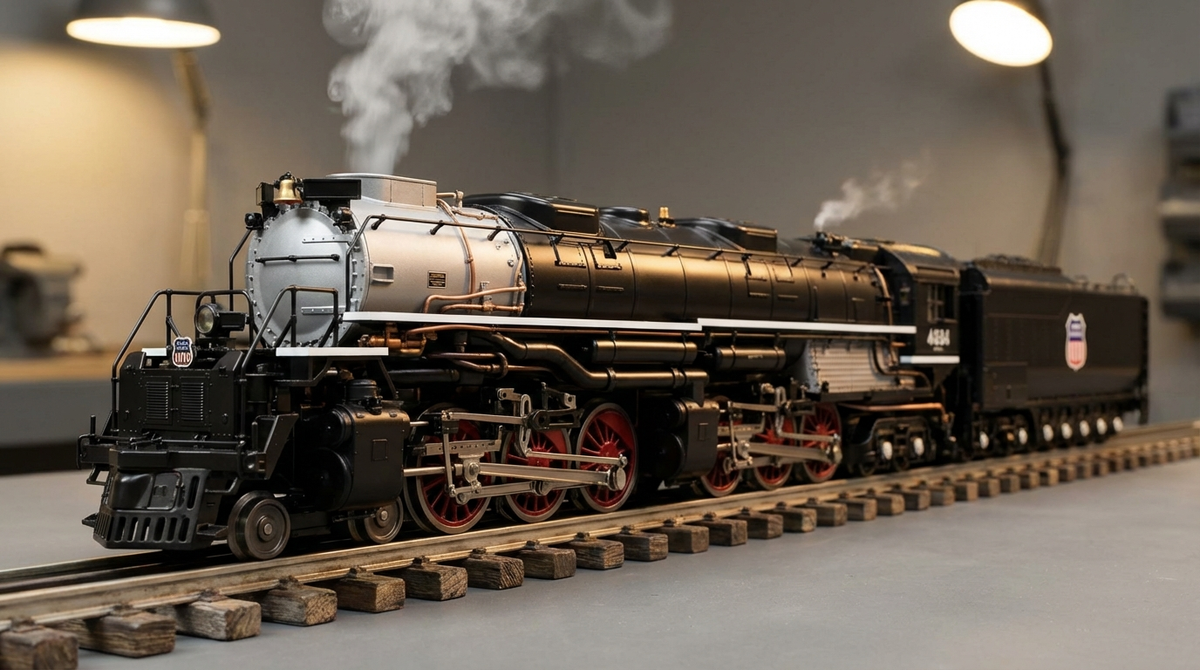
Five years ago, when Mike Wolf announced he was retiring and closing MTH Electric Trains, I genuinely thought the O gauge world was about to lose one of its most innovative players. I remember sitting in my office at the Railroad Museum, staring at my shelf of MTH Premier PRR locomotives, wondering if I'd just witnessed the end of an era.
I was wrong. And I'm glad I was.
MTH didn't die. It got smaller, leaner, and frankly, more interesting. For anyone considering an MTH O gauge purchase in 2025, the landscape looks different than it did in the company's heyday, but the value proposition remains strong. The trick is knowing what to buy, what to avoid, and how to navigate a support ecosystem that's fundamentally changed.
The short version: Mike Wolf retired, the company shed about two-thirds of its workforce, revenue dropped from a peak of around $50 million to roughly $15 million, and the product lines got trimmed. But the company kept breathing.
The longer version tells you more. MTH sold its entire HO and S gauge tooling portfolio to ScaleTrains.com in early 2021. Then came sales of select O gauge tooling to Atlas and Lionel. When the dust settled, MTH had retained roughly 80% of its O gauge tooling. The Premier and RailKing lines survived intact.
What changed was how MTH does business. Gone are the thick printed catalogs and massive production runs. In their place: monthly uncataloged announcements via email newsletter, a built-to-order production model, and a heavy reliance on dealer-commissioned custom runs. It's a leaner operation run by Rich Foster and Bradley DeLeon, and it works.
If you're new to MTH, the first decision you'll face is choosing between their three O gauge lines. Each serves a different kind of operator, and picking wrong will either waste your money or leave you frustrated.
RailKing is where most people should start. These models are "selectively compressed," meaning they're slightly shorter than true scale to navigate tighter curves. Most RailKing locomotives run happily on O-31 diameter track, which makes them ideal for 4x8-foot layouts or table-style displays.
You're not sacrificing quality for flexibility. RailKing models still feature Proto-Sound 3.0 electronics, die-cast trucks, and reasonably detailed bodies. A RailKing diesel typically runs around $399, and you're getting genuine command control capability at that price.
Within RailKing, there's a sub-category called RailKing Imperial that bridges the gap between standard RailKing and Premier. Imperial models add Premier-level details like real coal loads, separate marker lights, and cab interior lighting while maintaining O-31 curve capability. The Imperial Berkshire is a perfect example of what this line offers.
The Premier line is for operators who prioritize scale fidelity over operational flexibility. These are true 1:48 scale models with separately applied detail parts, die-cast construction throughout, and the kind of prototype accuracy that makes rivet counters smile.
The trade-off is obvious: Premier locomotives need bigger curves. A Premier 4-8-2 Mohawk requires O-54 curves minimum. The big articulated steam like the Pennsylvania Q2 demands O-72. If you're running a basement empire with sweeping curves, Premier is where the magic happens. If you're working with limited space, you'll be disappointed.
Pricing reflects the detail premium. Premier diesels start around $550, and large steam locomotives can exceed $1,600 for something like the Premier Big Boy.
For collectors of vintage reproductions, Tinplate Traditions offers stamped metal models that echo the pre-war era. These aren't historically accurate reproductions of specific Lionel items (that's a legal minefield), but recreations of Ives, Dorfan, and other classic manufacturers. The Detroit Monorail sets are particularly sought after. Modern versions include Proto-Sound 3.0 if you want both nostalgia and functionality.
Here's where my archivist brain kicks in, because the historical record matters. MTH's sound systems have evolved through several generations, and buying the wrong one can be an expensive mistake.
The original Proto-Sound dates from the mid-1990s. It uses an 8.4V battery that, when it fails, can scramble the board's programming. The infamous "three clanks of death" haunts PS1 owners who let their batteries die completely.
If you acquire a PS1 locomotive, your first job is replacing that battery with a BCR (Battery Charge Regulator). This is non-negotiable. Do it before you run the engine once. The BCR eliminates the battery as a failure point and lets the board charge properly via the track.
Between approximately 2000 and 2005, MTH produced locomotives with PS2 5-volt boards. These are the engines that keep me up at night.
Forum data and user reports paint a grim picture: failure rates as high as 67% for these boards. The components run near their limits, and age hasn't been kind. When they fail, they often take out multiple components at once. The double-stacked board design makes repair practically impossible in many cases.
If you're looking at a used MTH locomotive from this era, assume the board will fail. Budget for a $180 PS3/2 Stacker board or a $200 PS3 upgrade kit on top of your purchase price. If the seller is asking $400, mentally add another $200 to your real cost.
Around 2005, MTH redesigned the PS2 board to run on 2.4 volts with a single-board architecture. This version is dramatically more reliable. Users describe them as "almost indestructible." I've seen these boards running strong after 15+ years of regular use.
You can identify a 3-volt PS2 by the rectangular charging port. The 5-volt versions have a circular port. When shopping used, this distinction matters enormously.
Modern MTH locomotives run Proto-Sound 3.0, which eliminated the rechargeable battery entirely. Supercapacitors handle the power storage now, which means no battery to fail, no BCR to install, and one fewer maintenance worry.
PS3 also brought DCC compatibility alongside the proprietary DCS system. If you run a mixed command environment, this flexibility is valuable.
That said, PS3 isn't perfect. A known design flaw in the wireless drawbar on steam locomotives can cause shorts when the plastic insulator rotates out of position. The fix is simple: inspect the drawbar before running, apply liquid tape to exposed contacts, or install MTH's $2 retainer clip (part FB0000037). Do this before your first run, not after you've cooked a main board.
MTH's Digital Command System has always been the control platform that die-hard operators swear by, and the WTIU (WiFi Track Interface Unit) released in late 2024 represents its most capable iteration yet.
At $474.95, the WTIU combines the old TIU and WIU modules into a single box. You control everything via the MTH DCS app on your phone or tablet. The interface is intuitive, and the track signaling is noticeably improved over older hardware.
The real breakthrough came with firmware update v1.3.0 in September 2025. This update enabled compatibility with Lionel's TMCC, Legacy, and Base 3 systems. If you run both MTH and Lionel command engines, you can now control your entire roster from a single app through the WTIU. That's a genuine game-changer for mixed-fleet operators.
The DCS ecosystem can also handle conventional AC and DC locomotives across multiple channels, meaning you don't need separate power supplies for your command and non-command equipment.
Beyond the electronics, MTH locomotives have earned a reputation for solid mechanical reliability. But a few specific issues crop up repeatedly in forum discussions and service reports.
The 2021 RailKing RS-3 release shipped with a firmware error that caused smoke units to overheat, warping shells. MTH issued a recall and free firmware update in February 2022. If you own one of these locomotives and haven't applied the update, stop using the smoke unit immediately.
Remote uncoupling is one of DCS's best features, but the coupler coils can burn out. Replacement coils run about $12 from MTH Parts & Sales, and installation is straightforward if you're comfortable with a soldering iron.
I keep a simple maintenance calendar for my MTH fleet. Every 25-50 hours of operation: lubricate axles and gears, clean wheels and pickup rollers, check and top off smoke fluid. Annually: check for firmware updates and, for stored PS3 engines, let them charge on powered track for 15 seconds before running. This schedule has kept my Premier K4 running smoothly since 2016.
Here's something that catches a lot of buyers off guard: MTH headquarters no longer performs repairs. For products shipped after May 31, 2021, warranty responsibility falls entirely on the authorized retailer who sold the item.
What this means in practice: if your new locomotive has a problem, you contact your dealer. They'll either repair it (MTH supplies parts) or issue a refund if repair isn't possible. Out-of-warranty work goes to Authorized Service Centers at a labor rate of $55/hour plus parts.
This makes dealer selection more important than ever. Buy from a retailer with in-house service capability if you can. The MTH dealer locator shows which shops are authorized, but you'll want to call ahead and ask about their service expertise.
Parts are available through MTH Parts & Sales LLC, which maintains exploded diagrams and a searchable inventory. They even offer a $95 LCD screen replacement service for DCS remotes.
One of the most interesting developments in the post-restructuring MTH world is how dealer-led custom runs now drive product diversity. These projects account for an estimated 30% of MTH's current business.
Retailers like Stockyard Express commission limited-edition pieces featuring regional railroads and historical schemes that wouldn't justify a mainline production run. Their U.S. Army FEF Northern run was limited to 24 units. The Lincoln Funeral Train reproduction limited to 20 sets.
MrMuffin's Trains, Pat's Trains, and other specialty retailers are filling gaps for collectors seeking specific liveries. The Wheeling-Pittsburgh Steel SW900M from Pat's Trains is exactly the kind of industrial prototype that mainstream catalogs ignore.
The catch? These runs sell out fast, often before they appear on MTH's main site. If you're hunting for a specific regional road name, subscribe to dealer newsletters directly.
The O gauge market in 2025 is healthier than it's been in years, which means you have genuine choices. Here's how I see the competitive landscape.
Lionel's Legacy RailSounds system is often considered the gold standard for sound quality, particularly the dynamic quilling whistle. If audio quality is your primary criterion, Lionel has the edge.
On value, though, MTH wins consistently. A Premier SD70ACe at $550 delivers comparable detail to a Lionel Legacy version at $700+. The gap widens with larger steam.
The control system comparison now favors MTH for operators with mixed fleets. The WTIU's ability to run Lionel command engines from the DCS app makes it a more versatile command station than Lionel's $600 Base3.
Atlas acquired significant MTH tooling and now produces some former MTH designs with licensed Proto-Sound 3.0 electronics. This creates an interesting dynamic where you might find the same basic locomotive under either brand.
Atlas O Master line models with PS3 price similarly to MTH Premier. The choice often comes down to which brand offers the specific prototype you want.
Nothing ruins the MTH experience faster than trying to run a Premier Big Boy on O-31 curves or wiring your layout in a way that kills the DCS signal.
The minimum curve specification in MTH's literature refers to the track's centerline diameter. Here's the reality check: MTH RealTrax O-31 actually measures closer to 29 inches. Lionel FasTrack doesn't offer a true O-31; their smallest standard curve is O-36.
My advice: always build one size larger than the minimum specification. If a locomotive is rated for O-54, plan for O-72 curves for realistic appearance and smooth operation. The "cheated radius" technique of using larger curves as easements into tighter minimums helps enormously.
The DCS signal travels through the track rails, which makes it sensitive to poor wiring. The official recommendation is star/home-run wiring: run dedicated feeders from a central terminal block to each power drop rather than using a common bus for the center rail.
Install power drops at least every 25 linear feet of track. Use 16-gauge stranded wire for runs up to 30 feet. Create electrically isolated blocks to prevent signal interference. These aren't suggestions; they're requirements for reliable DCS operation.
After wading through all this information, here's my practical guidance for different types of operators.
If you're working with a 4x8-foot table and a budget under $1,000, stick with RailKing. A RailKing diesel around $400, some freight cars, a DCS Explorer for basic command control, and starter track will get you running with money left over.
If you've got a dedicated space with O-54+ curves and a taste for prototype accuracy, Premier is where you want to be. Budget for the WTIU command system. Consider a Premier Challenger or Big Boy as your flagship piece, with a diesel fleet for everyday switching duties.
Buying used can yield tremendous value if you know what you're doing. Prioritize PS3 or PS2 3-volt engines. Check the charging port shape to identify electronics generations. For PS2 5-volt locomotives, negotiate the price down by at least $150-$200 to cover the inevitable upgrade cost.
Watch auction sites for "dead" Premier locomotives with failed PS2 5V boards. These can be bought cheaply and restored with PS3 upgrade kits for less than buying a working used PS3 version.
MTH's announced 2026 releases follow the established pattern: new paint schemes on existing tooling. The RailKing 4-6-0 with Overton cars targets early-era modelers. Premier Ann Arbor GP-35 is another dealer custom run for Old Engine House. The Premier Mohawk limited release confirms continued investment in the high-end steam market.
Don't expect groundbreaking new tooling. The RailKing Operating Aquarium Car was the only genuinely "all-new" design announced in 2024-2025. MTH's strategy is maximizing their existing mold library, not engineering new platforms.
The semiconductor supply situation remains a wild card. MTH acknowledges being "low on the totem pole" for chip allocation, which could affect DCS component availability and pricing.
Five years after the restructuring announcement that I thought would end the company, MTH O gauge trains remain a compelling choice for serious operators. The product quality hasn't slipped. The electronics have actually improved with PS3's battery-free design. The new WTIU command system offers capabilities no competitor can match for mixed-fleet operators.
The caveats are real but manageable. Avoid PS2 5-volt engines unless you're prepared to upgrade them. Buy from authorized dealers who can handle warranty service. Wire your layout properly for DCS. Do those three things, and you'll likely have the same experience I've had: reliable operation, impressive sound and smoke, and a roster that holds its value.
I still haven't finished my HO layout after eleven years. But my MTH Premier K4 steaming around the club's O gauge display? That one runs every operating session without complaint. Some things just work.
✨ Complete Your Layout: Explore our wide selection of Photo Real buildings, diorama backdrops, detail parts, and accessories in every popular scale.
✨ Unmatched Realism: From chrome detailing products to neon lighting kits – every piece is designed to make your miniature world come alive.