
Model Train Hobby Age Recommendations: A Practical Guide for Every Stage
Posted by Patricia Nakamura on 2nd Feb 2026
Order by phone: 763-231-7847
Free Shipping On Orders Over $100!
If you are already registered, please log in.
Create your account and enjoy a new shopping experience.
Create A New AccountPosted by Patricia Nakamura on 2nd Feb 2026
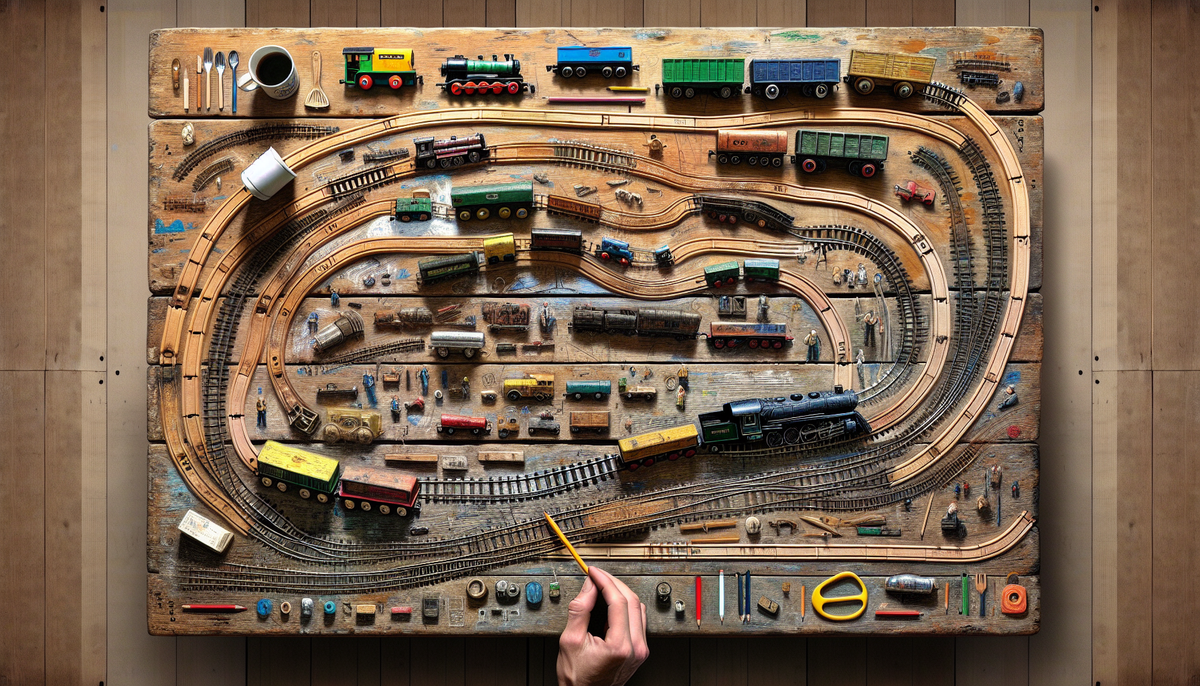
When I inherited my father's half-finished N scale layout back in 2011, I remember staring at the boxes of locomotives and rolling stock, each one stamped with that intimidating "14+" warning. My nephew was seven at the time and utterly fascinated. I found myself wondering: was I supposed to lock these trains away until he hit high school?
Turns out, I'd fallen for one of the hobby's most persistent misunderstandings. That age label isn't about your kid's capability. It's about paperwork.
Here's what nobody tells you at the hobby shop: manufacturers slap "14+" on detailed model trains to bypass expensive toy safety testing requirements. In the US, the Consumer Product Safety Improvement Act of 2008 made ASTM F963 the mandatory safety standard for products intended for children 12 and under. Meeting those standards costs real money: third-party testing, certification, strict rules on lead content, phthalates, and electrical safety.
By labeling a product for ages 14 and up, companies can legally classify it as a "collector's item" rather than a toy. This exemption exists in both the US and EU markets. The EU's guidance documents spell it out plainly: products bearing visible indication that they're "intended for collectors of 14 years of age and above" get a pass.
So when you see that warning, read it as "not tested as a toy" rather than "your 10-year-old will destroy this."
This wasn't always the case. Toy trains in the 1940s and 50s were marketed squarely at boys aged 6 to 9. Lionel and American Flyer built their empires on father-son bonding over the Christmas tree layout. Some hobbyists on forums recall getting their first trains at age 4 or 5, and even earlier in some families.
The shift started in the 1970s. The CPSC's creation in 1973 and the subsequent Small Parts Regulation in 1979 began pushing age recommendations upward. A 1970s TYCO HO set shows an "Age Level: 8-11 Years" label on the box. By the time the CPSC issued detailed age determination guidelines and Congress mandated ASTM F963 in 2008, the game had completely changed.
Today, you'll find Bachmann's standard HO and N scale products carrying 14+ warnings, as do Atlas locomotives and Athearn models. But look closer at the same brands, and you'll spot their kid-friendly lines sitting right alongside the "collector" items.
After years of helping friends introduce their kids to trains, I've learned that scale choice matters far more than whatever number is printed on the box. Bigger trains survive rough handling. Smaller trains reward patience and dexterity. Match the scale to the child, and you're golden.
If you've got a backyard and a younger child, G scale track is built like a tank. Code 332 rail stands over a third of an inch tall and shrugs off weather, dirt, and the occasional soccer ball. Parents on the Bachmann forums consistently recommend large scale for children under 8, precisely because these trains can take a beating.
The tradeoff? Cost. A PIKO G-Scale starter set runs $350-500, and LGB's manual still warns that their power packs require adult supervision. But the durability pays off when you're not replacing broken detail parts every month.
Lionel's O gauge has threaded this needle for generations. The trains are large enough to handle confidently but detailed enough to satisfy adults. Atlas O-gauge track uses Code 148 or 125 rail that balances realism with resilience.
Lionel's tiered product line makes smart age matching easy. Their Ready-to-Play battery sets suit ages 4 and up. The Thomas & Friends LionChief set carries an 8+ rating, while the Polar Express LionChief jumps to 14+. The owner's manual explains that this relates to the transformer, which requires mature handling.
HO is where most American modelers land. The variety is staggering, the parts are affordable, and you can fit a meaningful layout in a spare bedroom. But HO demands more care than larger scales.
Track codes in HO range from sturdy Code 100 down to delicate Code 70 and 55. The finer the code, the more realistic the appearance, but also the easier it bends under clumsy fingers. For kid-friendly HO, stick with Code 100 on integrated roadbed systems like Bachmann E-Z Track.
I love N scale. My father loved it. At 1:160, you can model entire mountain passes in a single room. But those tiny details snap off with the slightest pressure, and Kato's N scale starter sets are better suited for kids 12 and older who've already developed the patience and motor control for miniature work.
Based on developmental research and hard-won forum wisdom, here's what I tell every parent who asks.
Children this age still explore the world with their mouths. They're learning cause-and-effect, not running mainline operations. Wooden train sets from brands like BRIO and Tiny Land work beautifully. A 42-piece wooden set can cost under $25.
If you want something that moves on its own, Märklin's "my world" line targets children ages 3-6 with battery-powered, remote-controlled trains featuring magnetic couplers and kid-safe electronics. Hornby's Playtrains offers a similar experience with easy-clip track for ages 3+. Lionel's Little Lines works for children as young as 2.5.
The small parts regulation exists for good reason: anything that fits in a 1.25" x 2.25" test cylinder poses a choking hazard for this age group.
By six, most kids have outgrown mouthing objects but still lack the consistent gentleness for HO detail parts. This is prime time for large scale electric trains.
Lionel's Ready-to-Play Construction set hits this sweet spot with battery power and child-proof durability. The Märklin Start up line takes 6-year-olds into digital control territory while maintaining robust construction. And PIKO's myTrain line, rated 8+, bridges the gap toward HO with colorful, child-friendly designs.
One dad on Trains.com forums shared that breakage of couplers on HO equipment happened almost monthly with his five-year-old. He switched to O gauge and the repairs stopped.
Most eight-year-olds can handle HO with adult guidance. Their attention spans have stretched to 20-30 minutes for focused activities, and fine motor skills have matured enough for careful handling.
For starter sets, I point families toward the Bachmann Rail Chief, a comprehensive 130-piece package. Kato's HO starter sets earn praise on Reddit for reliability. Hornby's community forums suggest avoiding their Junior line for this age, recommending instead their standard analog sets for kids ready for the real deal.
The recurring advice from experienced parents: invest in quality integrated roadbed track like Kato Unitrack. The snap-together system eliminates connection failures that frustrate kids and kill interest.
Digital Command Control opens up independent operation of multiple trains on the same track. Kids who've grown up with tablets and game controllers find the digital interface intuitive.
Entry-level systems like the Digitrax Zephyr Express offer user-friendly learning curves. The manual explains that its "Jump Ports" let friends use simple DC power packs as additional throttles. The NCE Power Cab and its clear documentation make another solid choice.
Even Roco's z21 start system, while rated 14+ for safety reasons, can work beautifully for a supervised 11-year-old who's ready for more control.
Adolescence brings the patience and fine motor development for model building. This is when kids start asking about structure kits from Woodland Scenics and Walthers Cornerstone.
Start simple. An elaborate multi-hundred-part craftsman kit will sit unfinished in a closet. A few snap-together plastic buildings teach basic assembly, gluing, and painting without overwhelming a newcomer.
Teens with soldering skills can install sound decoders and build Arduino-controlled crossing signals. The Woodland Scenics Just Plug system offers solder-free lighting for those not quite ready for the iron.
This is where mentorship matters. I learned more from club members in my first year than I did from a decade of YouTube videos. Advanced skills like scratch-building transfer best in person.
Nothing kills enthusiasm faster than trains that won't stay coupled. Understanding coupler types saves headaches.
Kadee metal knuckle couplers are the hobby standard. Made from die-cast zinc alloy, they'll outlast your layout. The Kadee #148 "Whisker" coupler gets particular praise for reliable centering.
The plastic clone couplers found on most starter set equipment look similar but perform worse. They bend, stretch, and slip apart on uneven track. Old horn-hook couplers are even worse and should be replaced immediately.
For G scale, hook-and-loop couplers sacrifice realism for durability. Young kids don't care that they look toy-like.
The plastics used in model trains directly affect survivability.
ABS plastic (the same stuff as LEGO bricks) is tough and impact-resistant. It flexes before breaking. This is what you want.
Polystyrene is rigid and brittle. It's the material of most snap-off detail parts on cheap models. Expect breakage.
Acetal (Delrin) excels for gears and moving parts due to its strength and low friction. The catch? It's nearly impossible to glue, making repairs challenging.
Die-cast zinc provides weight and strength for locomotive frames and quality couplers, though poorly formulated alloys can develop "zinc pest" over decades.
I've compiled what I wish someone had shown me when I started.
| Brand | Product Line | Age Label | Best For |
|---|---|---|---|
| Märklin | my world | 3+ | Toddlers and preschoolers |
| Märklin | Start up | 6+ | Early elementary kids |
| Märklin/Trix | Minitrix | 15+ | Collectors and adults |
| Hornby | Playtrains | 3-5+ | Battery-powered learning |
| Hornby | Standard Sets | 14-17+ | Serious modelers (some have sharp points) |
| Lionel | Ready-to-Play | 4+ | Durability-focused families |
| Lionel | LionChief | 8-14+ | Feature-rich but supervised |
| Lionel | Legacy | 14+ | Advanced command control |
| Bachmann | Thomas HO | 8+ | Licensed characters |
| Bachmann | Standard HO/N | 14+ | Traditional modeling |
| PIKO | myTrain | 8+ | Bridge to HO |
| Kato | Starter Sets | 8-14+ | Reliable track systems |
When my nephew started visiting regularly, I had to rethink my N scale approach. The key is reducing "don't touch" anxiety without turning your layout into a museum.
A simple 4-6 inch fascia board around your layout edge catches derailed trains before they hit the floor. Clear polycarbonate guards offer protection without blocking views. The Model Train Forum has excellent discussions on building "playable" layouts.
For family layouts, skip the flex track on cork. The snap-together roadbed systems like Märklin C Track and Kato Unitrack cost more per foot but save countless hours of troubleshooting. When joints fail on flex track, kids don't understand why their train stopped. They just get frustrated.
Don't trust factory press-fits on rolling stock you let kids handle. A drop of CA glue on smokestacks, ladders, and brake wheels prevents the most common casualties. For handrails, brass wire replacements outlast brittle plastic originals.
I've watched too many families burn out after a cheap starter set fell apart. Buying age-appropriate quality from the start saves money in the long run.
Bachmann's out-of-warranty repair fee runs $39 for non-DCC locomotives, $49 for DCC, and $75 for sound-equipped models. Kato's repair service charges $45-70 plus parts, with a 60-day warranty that excludes misuse. Lionel's warranty runs one year but excludes products over three years old.
A single repair on a $150 starter set locomotive can cost a third of the original purchase price.
Quality brands retain value. Original packaging, brand reputation, and condition drive secondary market prices. A used Lionel Polar Express set typically sells for 50-55% of retail. Generic bargain sets? Maybe 20-25%.
The advice on Reddit and Model Train Forum consistently points toward investing in quality pieces that hold value.
Start with a solid power system. An expandable DCC setup like the NCE Power Cab won't need replacement as skills grow. Add decoders incrementally, upgrading to sound as budgets allow.
Model railroading offers real benefits for many neurodivergent children. Trains hold special appeal for kids on the autism spectrum, and research supports that the hobby's structure can build focus and sequencing skills.
The predictable, systematic nature of track layouts and electrical control appeals to children who thrive on order. Rhythmic motion and sounds can be genuinely calming. Occupational therapy research shows how systematic hobbies support skill development.
For sensory-sensitive children, train shows and club meetings can overwhelm. The ASERT Autism Toolkit recommends noise-canceling headphones and designated quiet spaces for breaks.
Kids with executive function challenges benefit from visual schedules and step-by-step picture instructions when tackling kit assembly or operating sessions.
If you're organizing events that include minors, the legal landscape has shifted dramatically. This isn't about paranoia. It's about protection for everyone involved.
The NMRA provides general liability insurance for 100% NMRA clubs. The policy FAQ explains coverage limits of $1 million per occurrence for officially sponsored events.
Here's what catches clubs off guard: the policy explicitly excludes abuse claims. The NMRA's At-Risk Persons Policy requires parents or guardians to maintain line-of-sight supervision during events.
Live steam and ride-on equipment require separate specialized insurance. Don't assume your standard policy covers everything.
Schools and community centers now require specific insurance endorsements. The 2025 Insurance Requirements in Contracts manual shows venues commonly demanding:
Adopt clear adult-to-youth ratios. Girl Scout guidelines and similar standards provide frameworks. BSA's "two-deep leadership" rule requiring two background-checked adults at all times has become industry standard.
All volunteers working with youth need background checks including searches of the National Sex Offender Public Website.
Liability waivers have limited enforceability for minors but remain important. They should include inherent risk statements, medical consent, and parent/guardian signatures.
Clear safety signage and physical barriers protect both the public and your models.
The hobby is changing in ways that favor younger participants.
Battery and wireless systems eliminate track power hazards. Bluetooth control via smartphone apps removes the cognitive barrier of complex DCC command stations. MTH's DCS Explorer and similar interfaces feel natural to kids who've grown up with tablets.
The EU's upcoming Toy Safety Regulation shows regulators adapting to new technologies with specific, data-driven requirements rather than blanket prohibitions.
Home 3D printing changes the repair calculation entirely. When a broken part can be replaced from a downloaded file, the risk of letting younger kids handle detailed models drops dramatically.
Model train hobby age recommendations aren't about the number printed on a box. They're about matching a child's developmental stage to the right equipment and providing appropriate supervision.
My nephew is sixteen now. He runs DCC sound locomotives on his own layout and recently scratch-built his first structure. But he started with a wooden BRIO set at three, graduated to O gauge at seven, and didn't touch my N scale until he was twelve and could demonstrate the patience it required.
The path matters more than the destination. Start big, build skills, and let capability rather than arbitrary labels guide your choices. A child who enjoys trains at five will still enjoy them at fifteen, as long as frustration from inappropriate equipment doesn't kill the spark along the way.
✨ Complete Your Layout: Explore our wide selection of Photo Real buildings, diorama backdrops, detail parts, and accessories in every popular scale.
✨ Unmatched Realism: From chrome detailing products to neon lighting kits – every piece is designed to make your miniature world come alive.