
Model Railroading 101 Complete Guide: From Benchwork to Operations
Posted by Harold Lindgren on 19th Jan 2026
Order by phone: 763-231-7847
Free Shipping On Orders Over $100!
If you are already registered, please log in.
Create your account and enjoy a new shopping experience.
Create A New AccountPosted by Harold Lindgren on 19th Jan 2026
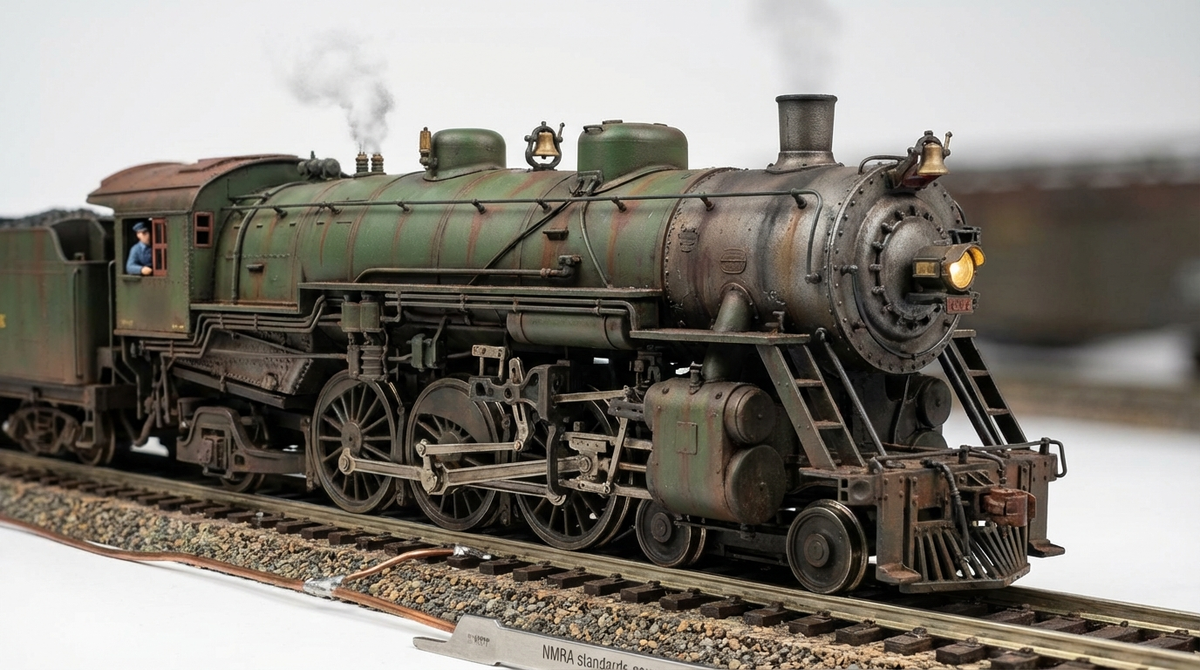
I spent 40 years building houses in the St. Croix Valley before I picked up model railroading in 2018. My wife told me I needed a hobby that didn't leave sawdust in the kitchen, and trains seemed like a natural fit. Four layouts later, I've learned that building a reliable model railroad isn't all that different from building a house: you need a solid foundation, good planning, and the right materials. Skip any of those, and you'll be tearing things apart six months down the road.
This guide is everything I wish someone had handed me before I started my first layout. We're going to cover every major decision you'll face, from picking your scale to wiring your track bus to getting your first trains running. I've watched too many newcomers get frustrated because they didn't understand the basics, and I've helped friends troubleshoot layouts that were doomed from the start by poor planning. Let's make sure that doesn't happen to you.
The scale you choose will affect nearly every purchase you make for the rest of your time in this hobby. I'm not exaggerating when I say it determines roughly 60% of your lifetime spend. An analysis of major hobby retailer catalogs shows that HO scale (1:87.1) commands about 65% of available accessory SKUs, while N scale accounts for roughly 22%. That disparity directly impacts what you can buy, what it costs, and how easy it is to find.
Before you spend a dime on track or rolling stock, you need to settle on a scale and stick with it. Mixing scales doesn't work. The decision should be based on two things: the space you have available and what you want to accomplish operationally.
Two standards bodies govern model trains: the NMRA (National Model Railroad Association) in North America and MOROP in Europe. Their standards are largely compatible, but there are differences you should know about.
| Scale | Ratio | Track Gauge | Best For |
|---|---|---|---|
| HO Scale | 1:87.1 | 16.5mm | Best product ecosystem, good balance of size and detail |
| N Scale | 1:160 | 9mm | Limited space, more expansive scenes |
| OO Scale (UK) | 1:76.2 | 16.5mm | British prototypes |
| O Scale | 1:48 | 32mm | Large detail, garden railways |
HO scale is the most popular globally because it offers the best balance of size, detail, and product availability. You can hold an HO locomotive in your hand, see the detail, and still fit a respectable layout in a spare bedroom. N scale, at roughly half the size of HO, lets you build more sprawling layouts in tight spaces. Japanese modelers, dealing with typically smaller homes, have made N scale their standard.
If you're in the UK, OO scale (1:76.2) dominates the market. Here's the quirk: OO uses the same 16.5mm track as HO, but the models are larger. That creates a slight gauge inaccuracy that purists correct with EM or P4 standards, but most modelers don't worry about it.
The space you have is a given. You can't negotiate with your walls. Minimum curve radius is the critical factor, and it's determined by scale and the equipment you want to run.
Modern, longer equipment needs broader curves than vintage short-wheelbase cars. If you want to run those big modern diesels or 89-foot auto racks, plan accordingly.
After 40 years of building houses, I can tell you that a solid foundation matters more than anything else. The same applies to model railroads. Your benchwork determines how stable your track will be, how easy maintenance becomes, and whether you'll be cursing your decisions two years from now.
Before you cut a single piece of lumber, plan your room. Consider climate control, lighting, and electrical access. I've seen guys build beautiful layouts in unheated garages only to watch their track buckle in summer and their engines refuse to run in winter.
Three benchwork styles dominate the hobby. Each has strengths, and each has situations where it shines.
| Type | Construction | Best For | Drawbacks |
|---|---|---|---|
| Open-Grid | 1x3 or 1x4 box frame with cross-members every 16-24 inches | Modular layouts, shelf layouts, constant-depth designs | Difficult to modify if cross-members obstruct wiring |
| L-Girder | L-shaped girders supporting cross-joists and risers | Free-form layouts, varied terrain heights, layouts requiring modification | Can be thicker, limiting multi-deck vertical space |
| Foam-on-Frame | 2-inch XPS foam over simple framework | Lightweight layouts, scenes with below-track-level terrain | Can be noisy, needs foam-safe adhesives |
I've built with all three methods. L-girder is my go-to for free-form layouts because it's extremely flexible. You can alter it later without rebuilding everything. Open-grid works great for modular sections where you need that finished edge for fascia.
Foam has become popular, and I understand why. It's lightweight, inexpensive, and you can carve rivers and valleys right into it. But be warned: track laid directly on foam can act like a sounding board. Your layout will be noisy unless you add cork or other roadbed material.
For beginners with limited shop time, a hollow-core door on sawhorses makes a quick, stable surface. It's what I recommend for your first small layout. They're lightweight, flat, and cheap. The downside? Limited access underneath for wiring and switch motors, and you'll compromise the door's strength if you cut into it extensively.
You're going to spend hours at this layout. Make sure it doesn't kill your back.
For multi-deck layouts, you need minimum vertical separation of 2.5 inches for N scale and 3-4 inches for HO between levels. A helix connecting decks should maintain a 2% grade, with 2.5-3% acceptable but limiting train length. For HO scale, 27-30 inch radius keeps larger locomotives happy.
Reliable trackwork is non-negotiable. Derailments and electrical issues are the most common points of failure, and nearly all trace back to track installation and wiring practices. Lab tests from Model Railroad Hobbyist showed that track code impacts derailments more than curve radius.
Track "code" refers to rail height in thousandths of an inch. Code 83 is 0.083 inches high; Code 100 is 0.100 inches. While older models used oversized "pizza cutter" wheel flanges requiring taller Code 100 rail, modern rolling stock adheres to NMRA's RP-25 wheel contour with finer flanges.
| Code | Scale | Best Use | Notes |
|---|---|---|---|
| Code 100 | HO | Train sets, club layouts, vintage equipment | Very robust, compatible with nearly all equipment including deep-flange vintage |
| Code 83 | HO | North American mainlines | Prototypically accurate, excellent reliability with RP-25 wheels |
| Code 80 | N | Older N scale, train sets | Robust and compatible with older equipment |
| Code 55 | N | Modern N scale mainlines | Prototypically accurate, may cause issues with older deep-flange wheels |
For new layouts, use Code 83 for HO or Code 55 for N on all visible mainlines. You'll get realism and high reliability with modern equipment. Taller codes can live in hidden staging where appearance doesn't matter.
You have four basic track types: sectional, sectional with attached roadbed, flextrack, and hand-laid. For most builders, the choice comes down to sectional versus flex.
Sectional track gives you known radii and easy installation. Every joint is a potential kink, but you know exactly what curve you're getting. Flex track is preferred for permanent layouts because you have fewer joints, meaning less chance of power loss or mechanical problems.
I use flex track for everything permanent. The initial learning curve is worth it. With sectional, you're fighting the geometry the manufacturer chose. With flex, you shape the geometry you need.
Turnouts (switches) are a primary source of derailments and electrical shorts. The frog type matters, especially for DCC operation.
For DCC layouts, I recommend Electrofrog or Unifrog turnouts. The extra wiring is worth the reliability. Nothing frustrates operators more than engines stalling in the middle of a turnout.
Here's a statistic that should get your attention: 48% of layout electrical shorts traced at regional meets came from preventable wiring flaws. Undersized bus wires and insufficient track feeders topped the list. DCC systems can supply up to 10 amps, turning a simple short into melted track ties or damaged decoders.
Do not rely on rail joiners for electrical continuity. They will fail over time due to oxidation. Every joint is a future problem waiting to happen.
Your wiring system needs three components: a power source, a bus, and feeders.
This is the definitive test for adequate wiring. Place a quarter across the rails at various points around your layout, especially the furthest points from the booster. Your system's circuit breaker should trip instantly. If it doesn't, your wiring resistance is too high. That's both a fire hazard and a system that won't protect itself during a real short.
For larger layouts, divide your railroad into power districts with separate circuit breakers. When a short occurs, only that district shuts down-not your entire layout.
DCC Specialties PSX series, CVP ZoneShare, and Digitrax PM42 are popular choices. These electronic breakers detect shorts and cut power faster than thermal breakers, protecting your equipment.
Reversing sections (reverse loops, wyes, turntables) need special handling. The polarity on these sections must switch automatically as trains enter and exit. Auto-reversers detect momentary shorts and flip polarity instantly.
Traditional DC (Direct Current) control is simple: voltage controls speed, polarity controls direction. One power pack runs one train on one electrically isolated block. DCC (Digital Command Control) changed everything. Digital signals on the track tell individual decoders which locomotive to control, enabling multiple independent trains on the same track.
For committed newcomers, start with DCC. Converting from DC later costs more than starting with DCC from day one.
| System | Price | Amps | Best For |
|---|---|---|---|
| Digitrax Zephyr Express (DCS52) | $199.99 | 3.0A | Beginners wanting all-in-one with computer integration path |
| NCE Power Cab | $199-$299 | 2.0A+ | Modelers prioritizing ergonomic walk-around throttle |
| ESU CabControl | ~$499 | 7.0A | ESU ecosystem enthusiasts valuing wireless control |
The Digitrax Zephyr Express is my go-to recommendation for newcomers. It's affordable, expandable via LocoNet, and has that integrated USB for computer control. The NCE Power Cab is equally solid with an ergonomic handheld throttle that doubles as the command station.
For those committed to premium sound decoders, ESU's systems integrate seamlessly with their LokSound decoders and support RailComPlus for automatic locomotive detection.
Wi-Fi modules offer a cost-effective way to add throttles. Adding a Digitrax LNWI module ($139) to a layout allows eight operators to use smartphones as full-function throttles via the free Engine Driver app. That's the same capacity as $800 worth of traditional wired cabs.
Decoders are the brains inside each locomotive. A 2025 survey found that 37% of locomotives advertised as "DCC-ready" still required modification to fit a standard decoder. Prioritize locomotives with factory-installed 21-MTC (NEM 660) or Next18 (NEM 662) sockets for plug-and-play installation.
Decoders are programmed using Configuration Variables (CVs). CV29 is the most important-a single number controlling multiple core functions through bit settings: direction, speed steps, DC operation, and addressing mode.
When a decoder behaves erratically, a reset restores factory defaults. This process varies by manufacturer:
| Manufacturer | Reset Command |
|---|---|
| Digitrax | Write 8 to CV8 |
| ESU LokSound | Write 8 to CV8 |
| NCE | Write 2 to CV30 |
| SoundTraxx | Write 2 to CV30 or 8 to CV8 |
| TCS/Zimo | Write 8 to CV8 |
Sound decoders are sensitive to momentary power interruptions from dirty track. A "keep-alive" capacitor connected to the decoder provides backup power to ride through dead spots. SoundTraxx CurrentKeeper and TCS Keep-Alive dramatically improve reliability.
The next evolution involves bi-directional communication. RailCom allows decoders to talk back to the command station, enabling CV reads on the mainline and real-time speed feedback. LCC (Layout Command Control) provides a separate network for accessories-turnout motors, signals, block detectors-freeing the DCC bus to focus on trains.
Major command stations from TCS, Zimo, and ESU now integrate both. Run a CAT-5 trunk line for LCC alongside your track bus during initial wiring. Even if you don't use it immediately, you'll be ready.
Creating a believable miniature world is where art meets engineering. This involves building terrain, adding vegetation and water, and weathering structures to look lived-in.
Static grass revolutionized model vegetation. An applicator uses electrical charge to make short fibers stand upright when applied to a glued surface. The Noch Gras-Master and Woodland Scenics Static King deliver professional results.
The key to realism is layering. Start with 2mm fibers as a base, add layers of 4mm, 6mm, and 12mm in varied colors (greens, yellows, browns). A final spray of diluted matte medium fixes everything in place.
The base of any water feature must be sealed and painted first, using darker colors to simulate depth.
| Product Type | Max Pour Depth | Cure Time | Best For |
|---|---|---|---|
| Two-Part Epoxy (Woodland Scenics Deep Pour) | 1/2 inch per pour | ~24 hours | Deep, clear water bodies |
| Acrylic Medium (Realistic Water) | 1/8 inch per pour | ~24 hours | Self-leveling shallow water |
| UV-Cured Resin | Thin layers | 2-4 minutes with UV light | Quick cure, no shrinkage |
| Acrylic Gel (Water Effects) | Surface only | Varies | Waves, ripples, waterfalls |
Structures give your layout context. Plastic kits from Walthers and DPM are inexpensive and easy. Laser-cut wood kits from Bar Mills and Blair Line offer finer detail but require care to prevent warping-always paint both sides. Resin kits provide exquisite detail but need cleaning of mold release agents.
Weathering makes models look used, not abused. Work from prototype photos. A typical workflow:
Operations transform a static display into a living transportation system. By simulating real railroad crew roles, you create purpose for every train movement.
Yards are often the biggest operational bottleneck. Good design includes:
Modular railroading lets individuals build portable sections conforming to common standards. At shows, these modules connect to create massive collaborative layouts.
| Standard | Scale | Philosophy | Best For |
|---|---|---|---|
| NTRAK | N Scale | Three continuous mainlines, 2'x4' modules, 40" rail height | Large public shows, continuous running |
| T-TRAK | Multiple scales | Small tabletop modules using Kato Unitrack | Beginners, limited space, maximum portability |
| Free-mo | HO (primarily) | Single mainline, 24" wide endplates, 50" rail height | Operation-focused modelers valuing prototypical accuracy |
A timing study at the 2025 Amherst Railway Society Hobby Show showed Free-mo HO modules averaged 18 minutes setup time per 8-foot section, compared to 55 minutes for legacy NTRAK modules with their multi-track connections and older connectors. Anderson Powerpole connectors make a real difference.
A simple 2'x4' single-track Free-mo module makes an excellent first project.
Basic Bill of Materials:
Building a model railroad is a long-term investment. While initial costs for a starter system can seem high, cumulative consumables and upgrades often represent the larger portion of total cost over time.
A general benchmark for a moderately detailed HO or N scale layout is $100-$150 per square foot, excluding labor. A simple 4x8 HO layout can easily cost $2,300-$2,500 to reach an operational state.
Model railroading involves potentially hazardous materials: soldering fumes, chemical solvents, resins, and fine dust. A safe workspace protects long-term health.
Documenting your layout with quality photos is rewarding. With right techniques, even smartphones produce professional results.
Standard LED bulbs often use low-frequency PWM dimming, creating invisible flicker captured by cameras. Use high-quality LEDs with CRI 95+ for accurate colors and flicker-free operation (25 kHz or higher PWM frequency for video).
Diffuse your light sources with softboxes or diffusion material to avoid harsh shadows that reveal miniature scale.
In macro photography, depth of field is incredibly shallow. Focus stacking is your friend:
Smartphone apps like Halide (iOS) and Open Camera (Android) provide manual focus control. ProCam and Lightroom Mobile support RAW shooting for maximum flexibility.
Model railroading is global, but distinct cultures have evolved in different regions.
| Region | Dominant Scale | Coupler Type | Key Brands |
|---|---|---|---|
| United States | HO (1:87.1) | Kadee-style Knuckle | Atlas, Athearn, ScaleTrains, Walthers, Kato |
| United Kingdom | OO (1:76.2) | Tension-Lock, NEM 362 | Hornby, Bachmann Branchline, Peco, Dapol |
| Continental Europe | H0 (1:87) | NEM Loop/Hook | Märklin (3-rail AC), Trix, Roco, Fleischmann |
| Japan | N (1:150) | Proprietary | Kato, Tomix, Micro Ace |
US modeling often features vast landscapes and long freight trains. UK modeling frequently focuses on branch lines, heritage steam, and dense urban scenes. Japanese modeling is dominated by N scale, reflecting dense urban environments with iconic commuter trains and Shinkansen.
Model railroading thrives on shared knowledge. Leveraging available resources accelerates skill development.
The National Model Railroad Association provides education, standards, and fellowship. Their greatest contribution is the standards for track, wheels, couplers, and DCC ensuring manufacturer interoperability.
The Achievement Program provides structured paths for skill improvement across 11 categories, leading to the Master Model Railroader title. EduTRAIN online clinics, hands-on workshops, and monthly virtual meetups offer ongoing education.
National conventions and the National Train Show are premier events for seeing new products, attending clinics, and touring layouts.
Reliability comes from precision and proactive maintenance. A systematic approach solves over 90% of operational problems.
Track and wheel cleaning is the single most important maintenance task. Dirty track causes stuttering locomotives and sound dropouts. A cloth dampened with 99% isopropyl alcohol works for routine cleaning. Avoid abrasive cleaners.
Some modelers apply graphite from a soft 6B pencil to railheads to improve conductivity. Products like DeoxIT D100L are effective but should be used sparingly.
Modeling a specific time and place requires research. Public domain and accessible information abounds.
You can't model a railroad at 1:1 scale. The art lies in selective compression: capturing essence while shrinking to fit available space. Identify signature scenes-a unique bridge, busy interlocking, distinctive station-then shorten distances between them. Preserve operational logic: sidings must hold your longest train, yard leads must allow switching without fouling the main.
Four layouts into my model railroading life, the biggest lesson I've learned is this: planning prevents problems. The hour you spend thinking about wiring before you cut your first piece of lumber saves twenty hours of troubleshooting later. The research you do on scale selection before buying your first locomotive prevents expensive regrets.
Start with your space and your goals. Pick your scale deliberately. Build solid benchwork-this is one place my house-building experience pays off every single time. Wire correctly from the beginning, even if it seems like overkill. Choose DCC if you're serious about this hobby. And take your time with scenery; it's where art meets engineering.
My workshop in Hudson might be cleaner than my wife expected, but it's never empty. There's always another project, another technique to try, another piece of that Soo Line history to capture in miniature. That's what keeps this hobby alive for me, and I suspect it will for you too.
✨ Complete Your Layout: Explore our wide selection of Photo Real buildings, diorama backdrops, detail parts, and accessories in every popular scale.
✨ Unmatched Realism: From chrome detailing products to neon lighting kits – every piece is designed to make your miniature world come alive.