
HO Scale Steam Locomotives for Sale: A No-Nonsense 2025 Buying Guide
Posted by Tony Marchetti on 30th Dec 2025
Order by phone: 763-231-7847
Free Shipping On Orders Over $100!
If you are already registered, please log in.
Create your account and enjoy a new shopping experience.
Create A New AccountPosted by Tony Marchetti on 30th Dec 2025
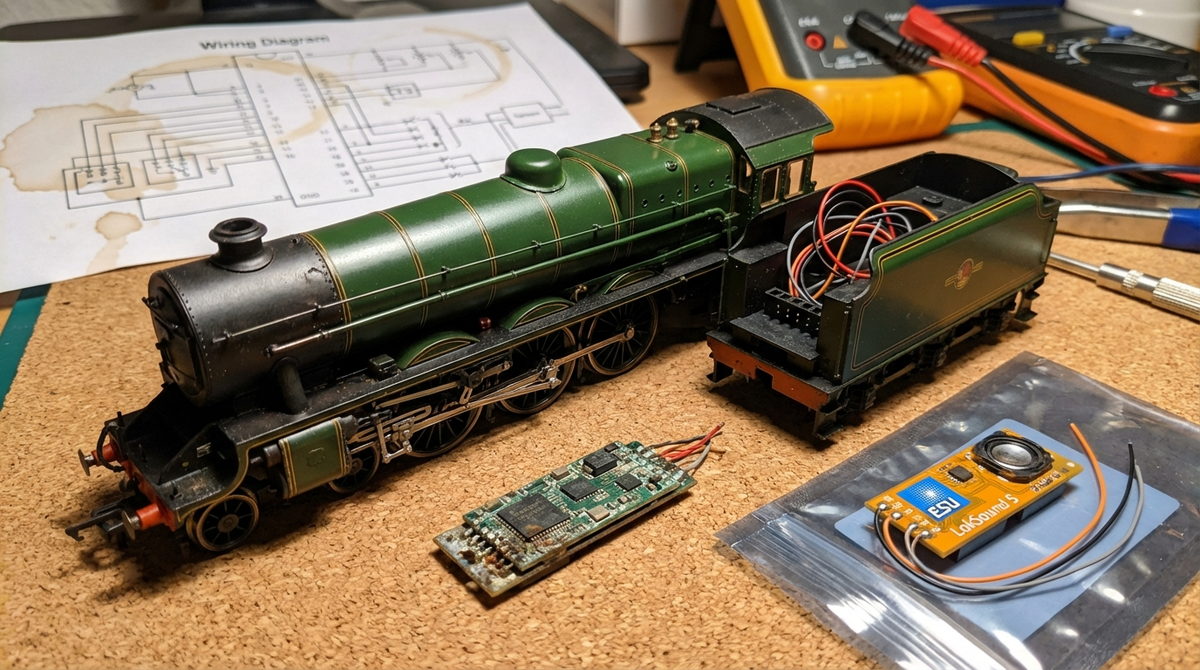
I spent 28 years fixing CTA rail cars at the Skokie Shops, and if there's one thing that career taught me, it's how to spot quality machinery and how to sniff out junk. My dad ran Lionel trains around our Christmas tree in Cicero when I was a kid, and I've been buying, running, and fixing model locomotives ever since. So when I see people overpaying for HO scale steam locomotives for sale or worse, getting burned by decoder failures nobody warned them about, it drives me nuts.
This guide is what I wish someone had handed me years ago. We're going to talk real numbers, real problems, and real solutions. No gatekeeping, no fluff. Just honest advice from someone who actually runs his trains instead of treating them like museum pieces.
The market right now is split down the middle. High-end stuff from companies like Rapido Trains sells out before it even hits shelves, while budget-friendly options from Bachmann keep multiplying. Broadway Limited's active HO steam catalog sits at around 307 products, which sounds like a lot until you realize how many are already sold out or discontinued.
The price spread is wild. You can grab a basic steamer for under $150, or drop over a grand on something decked out with sound, smoke, and die-cast everything. Most serious hobbyists land somewhere in the $300-$600 range for a quality locomotive with decent sound.
Here's something the manufacturers don't advertise: decoder reliability issues are a major headache right now. Over 40% of recent forum discussions about Broadway Limited mention Paragon 3 and Paragon 4 failures. I've seen it myself. Beautiful locomotive, sounds amazing for six months, then the decoder goes haywire.
That's exactly why BLI brought back their Stealth Series. These are DCC-ready locomotives without factory-installed sound. The idea? Buy the mechanically solid locomotive, then install your own trusted decoder from ESU LokSound or SoundTraxx Tsunami2. More work upfront, but you avoid the repair headaches down the road.
You've got three main paths: buy new from retailers, hunt the used market, or wade into international waters. Each has its own quirks.
Your local hobby shop is always my first recommendation. They can order anything in production, and you're supporting the ecosystem that keeps this hobby alive. Online, TrainWorld, Walthers, and Model Train Market carry extensive inventories.
The catch with new releases? They sell out fast. Manufacturers like Rapido and Broadway Limited run on pre-order systems. They announce a model, set an order deadline, and if you miss it, you're stuck waiting years for the next run or paying secondary market premiums.
Here's where savvy buyers clean up. Models from Bachmann Spectrum and Walthers Proto 2000 regularly pop up in the $150-$250 range. These aren't junk. Many offer DCC-ready platforms with rock-solid mechanicals. Someone else paid full price and maybe ran them a few times. Their loss, your gain.
eBay is the obvious hunting ground, but don't sleep on train shows. Prices at shows are more negotiable, and asking for 15% off higher-ticket items is pretty standard.
Not all manufacturers are created equal. Here's my honest assessment of who's making what.
Broadway Limited builds heavy, die-cast locomotives with excellent pulling power. Their Paragon4 sound systems include synchronized smoke and Rolling Thunder subwoofer support. When they work, they're fantastic.
The problem? Those decoder reliability complaints keep piling up. If you buy BLI, consider grabbing a Stealth version and installing an ESU or SoundTraxx decoder yourself. The mechanicals are solid. It's the electronics that cause grief.
BLI announced new models for 2025 and 2026, including the UP Big Boy and PRR B6sb. If you want one, get your pre-order in early.
Bachmann owns the entry-level market with their Standard line, but their Spectrum series competes with anything on the market. Their recent locomotives with TCS WOWSound decoders get far fewer electronic complaints than BLI's Paragon stuff.
The trade-off? Some Bachmann steamers are lighter and don't pull as well. The K4s Pacific, for example, runs great but needs some extra weight if you're hauling long consists up grades.
Their 2025 catalog shows continued investment in sound-equipped models using SoundTraxx Tsunami2 and TCS decoders.
Athearn Genesis represents their top-tier line, and the steamers don't disappoint. The Big Boy and Challenger models feature Tsunami2 sound and high-detail plastic construction.
Watch out for availability. Many Athearn steam locomotives show as discontinued, meaning you're hunting used or waiting for re-runs that may never come.
Rapido is the boutique option. Their Canadian Pacific D10 and H1 Hudson set the standard for detail and running quality. They use ESU LokSound V5 decoders, full gear drive on all axles, and coreless motors for buttery-smooth operation.
The downside? Most Rapido steam models are sold out. Their upcoming CNR H-6 Ten-Wheeler required hitting a conditional order deadline just to go into production. If you want Rapido, act fast when announcements drop.
Lionel is making a serious push back into scale HO with their all-new 2-8-4 Berkshire scheduled for Q4 2025. Die-cast boiler and frame, fan-driven smoke, and ESU LokSound decoders. They're offering Nickel Plate, C&O, and Pere Marquette road names.
This is brand new tooling from prototype drawings, not a re-run of old stuff. If Lionel delivers on their promises, this could shake up the market.
Rivarossi's Big Boy offers a budget-friendly alternative in the $460-$600 range with ESU LokSound 5. It handles tighter curves than competitors, making it suitable for smaller layouts.
The trade-off is less fine detail than BLI or Athearn versions. But if you're working with 18-inch radius curves, the Rivarossi might be your only practical option for running a Big Boy.
Certain locomotives dominate the market year after year. Focusing your search on these gives you the most options to compare.
The biggest steam locomotive ever built, and everybody wants one. Your main choices are Athearn Genesis versus Broadway Limited.
Athearn runs around $650-$740 with DCC sound. Newer versions use Tsunami2 decoders with prototype-specific sound recorded from the real #4014. Older models had MRC sound, which is inferior.
BLI's version at roughly $750 features heavier die-cast construction and synchronized smoke, but those Paragon decoder concerns apply. Many buyers purchase BLI and immediately swap in an ESU LokSound.
Rivarossi's option at around $500 works for tighter curves but sacrifices detail.
The streamlined Dreyfuss Hudsons are Art Deco icons. BLI offers the widest range with J1e, J3a Dreyfuss, Commodore Vanderbilt, and Niagara S1b versions. Paragon4 sound with Rolling Thunder runs $450-$550.
Bachmann's newer J3a Hudson with TCS WOWSound offers reliable electronics and Keep-Alive built in. Less worry about decoder failures.
Older MTH versions pop up used with their Proto-Sound 3.0, but parts and service from MTH have become harder to source since their restructuring.
The PRR's signature passenger hauler gets high-detail treatment from multiple manufacturers. BLI's K4s is considered the most dimensionally accurate with excellent 7.5 oz drawbar pull and synchronized smoke.
Bachmann's version with TCS WOWSound runs around $320-$410. It has undersized drivers and less accurate dimensions, but the electronics are solid and it won't break the bank.
The standardized USRA designs mean a Mikado works for dozens of different railroads. BLI offers both Light and Heavy versions with Paragon4 sound.
For budget buyers, Bachmann's Sound Value 2-8-0 and their DCC-ready Mikados represent tremendous value. Used Bachmann Spectrum Mikados go for $100-$200 and make excellent platforms for decoder upgrades.
Watch for split axle gears on older Walthers Proto 2000 Mikados. It's a known failure point.
For 19th-century and early transition era modelers, Bachmann's Spectrum Modernized 4-4-0 is the clear winner. Based on Ma & Pa prototype with road-specific details, rated to pull 34 cars.
Their Standard line Jupiter and Genoa versions cover the 1860s-1870s Western era. Stay away from old Rivarossi/AHM 4-4-0s unless you enjoy projects. Those use OO scale tooling (1:76, not true HO) with crude three-pole motors.
The guts of a modern HO steamer determine how it runs, sounds, and holds up over time. Here's what matters.
ESU LokSound 5 is the gold standard. Sixteen-bit audio, up to 10 sound channels, and motor control that auto-tunes to your locomotive. Variable PWM works great with coreless motors. The LokProgrammer software gives you complete control over every setting.
SoundTraxx Tsunami2 runs close behind. Their DDE (Dynamic Digital Exhaust) adjusts chuff intensity based on motor load, which sounds fantastic on grades. Seven-band equalizer lets you tweak the audio to your speaker setup.
TCS WOWSound wins on user-friendliness. Their Audio Assist feature lets you program the decoder by listening to voice prompts instead of memorizing CV numbers. Chuffinity technology varies the exhaust rhythm so it never sounds robotic. Bachmann uses TCS in their Spectrum line.
BLI Paragon4 integrates seamlessly with their smoke units and offers Rolling Thunder subwoofer output. The sound quality is excellent when it works. The question mark is long-term reliability.
Modern quality locomotives use 5-pole skew-wound can motors. The skewed armature delivers smooth, quiet operation at low speeds. Athearn Genesis, Bachmann Spectrum, and Rapido all use these.
Coreless motors take smoothness to another level with zero cogging. Rapido uses them in their D10 and Hudson models. The catch? They need DCC decoders with high-frequency PWM (20 kHz or higher) to avoid overheating. ESU, ZIMO, and modern SoundTraxx decoders handle this fine. Cheap decoders can fry a coreless motor.
Delrin plastic gears run much quieter than metal. That matters when you have a sound decoder. Nothing ruins realistic exhaust chuffs like gear whine drowning them out.
Metal gears are tougher but noisier. On sound-equipped models, the added volume can become annoying. Quality plastic gears, properly made and aged, last for decades.
A keep-alive is a capacitor that stores power to bridge brief interruptions. Dirty track, turnout frogs, rough spots-instead of the sound cutting out or the locomotive stalling, the capacitor keeps everything running smoothly for several seconds.
Steam locomotives with rigid wheelbases need this more than anything else. SoundTraxx CurrentKeeper II provides up to 10 seconds of reserve power. TCS and ESU offer similar products. Most modern decoders have dedicated connection points for easy installation.
Used locomotives can save you serious money, but only if you don't get stuck with someone else's headaches. Run through this checklist before you hand over cash.
Wheel Quartering: Look down the side rods. Crank pins on each side should be offset 90 degrees. If they're off, the locomotive binds and jerks. Older brass and kit-built models are prone to this.
Valve Gear and Rods: Roll the locomotive gently by hand. Watch for binding, catching, or bent parts. Check for missing pins and loose screws. Delicate valve gear gets damaged easily in shipping.
Gear Noise: Listen while rolling. Smooth whir is normal. Loud grinding means worn or cracked gears. Older Bachmann and Athearn models with plastic gears can develop cracks.
Wheel Wear: Check driver treads for worn plating, pitting, or heavy grime. Worn plating kills electrical pickup.
Motor Test: If possible, run on DC track. Listen for excessive noise or humming. Smell for overheating. Old open-frame motors draw high current and run hot.
Pickup Continuity: Use a multimeter. Check for continuity from each set of wheels to the motor or decoder leads. Broken wires in the tender drawbar or failing wipers cause intermittent power.
Motor Isolation: Before installing any DCC decoder in an older model, verify NO continuity between motor terminals and the frame. Split-frame designs from AHM, Rivarossi, and Mantua will fry a decoder instantly if the motor isn't isolated.
Read the Decoder: On a programming track, try reading CV8 (Manufacturer ID) and CV1 (Short Address). Failure to read indicates a dead decoder or bad wiring. BLI Paragon decoders show up frequently with issues.
Decoder Reset: If the locomotive doesn't respond, try writing the correct value to CV8 (usually 8). QSI decoders use a different, more complex reset procedure.
Stall Current: If you have the tools, measure motor stall current. Typical HO motors should pull under 1 amp. Old open-frame motors with high stall current destroy decoders.
Detail Parts: Note any missing or broken handrails, whistles, bells, or piping. Custom brass replacements can be hard to source.
Smoke Unit: If equipped, ask about its condition. Charred wicks or residue around the stack indicate it was run dry or overfilled. BLI and MTH smoke units can be damaged this way.
Before making an offer, check eBay's sold listings to see what similar models actually sold for. That's your leverage.
Secondhand dealers typically offer sellers 30-50% of resale value. Buying from a dealer costs more, but you might have some negotiating room.
On eBay's Best Offer listings, starting 10-20% below asking is reasonable. Lowball offers get ignored. At train shows, politely asking for a discount is expected.
A well-maintained steamer lasts decades. Neglected ones develop problems that cost far more to fix than the price of a small tube of grease.
After every 24-50 hours of operation, your locomotive needs attention.
Lubrication: Use only plastic-compatible hobby lubricants. Labelle and Woodland Scenics Hob-E-Lube work great. Never, ever use WD-40, 3-in-1 oil, or Vaseline. They attack plastic gears and attract dirt.
Use a toothpick as an applicator. One drop is enough. Wipe away excess immediately. Over-lubrication attracts dirt and causes wheel slip.
Cleaning Wheels and Track: That black residue is primarily metal oxide from micro-arcing, not just oil and dirt. Clean with a lint-free cloth and mineral spirits or contact cleaner like CRC or DeoxIT. Isopropyl alcohol works but can worsen arcing over time. Avoid abrasive cleaners that scratch rails and trap more dirt.
Decoder Swap: Replacing a basic or unreliable decoder with an ESU LokSound 5 or SoundTraxx Tsunami2 is the single biggest improvement you can make. For DCC-ready models with 8-pin or 21-pin sockets, it's plug-and-play. Older DC models require isolating the motor from the frame and hard-wiring.
Speaker Upgrade: Even a mid-range decoder sounds dramatically better with a proper speaker in an enclosed baffle. Use the largest speaker that fits in your tender.
Keep-Alive: Installing a TCS Keep-Alive or SoundTraxx CurrentKeeper eliminates stalling on dirty track and through turnouts. Most tender installations are straightforward with dedicated decoder connection points.
LED Headlight: Replacing incandescent bulbs with warm white LEDs gives brighter, more realistic lighting with lower current draw. LEDs need a current-limiting resistor (typically 680-1000 ohms) wired in series.
Fair warning: opening up a locomotive and making modifications voids the manufacturer warranty. Test new locomotives thoroughly before modifying.
Sometimes the model you want is only available overseas. Before you order, understand what you're getting into.
The rules changed recently, and not in buyers' favor.
United States: The $800 de minimis exemption is suspended for shipments from China, Canada, and Mexico. All commercial goods from these countries now face tariffs that can reach 25-50% on some model train products. Factor that into any "deal" you think you're getting.
European Union: The EU is abolishing their €150 customs duty exemption starting in 2026. All imports will face both VAT and customs duties plus new handling fees. EU buyers should look for IOSS-registered sellers who collect VAT at purchase to avoid surprise charges at delivery.
Canada: Under CUSMA, goods shipped by courier from the US are duty-free up to C$150. But postal service shipments have only a C$20 threshold. Know how your order ships before you order.
Power Systems: Most North American and European brands use 2-rail DC. Märklin uses 3-rail AC and is completely incompatible with standard HO track without major modification. Trix (Märklin's sister brand) makes 2-rail DC versions that work fine with US systems.
Decoders: European decoders from ESU and ZIMO are multi-protocol, supporting both DCC and other formats. They'll work with any NMRA-standard DCC system.
Couplers: European models come with hook-and-loop couplers in NEM 362 pockets. Converting is simple. Kadee makes couplers (#17, #18, #19, #20) that plug directly into NEM pockets. Five-minute swap.
Wheels: Rivarossi uses RP-25 profiles compatible with US track. Older European models with deep flanges may have trouble with American turnout frogs.
Manufacturer warranties often don't cross borders. Bachmann has separate US and European service departments. Check policies before buying.
Use tracked, insured shipping. Courier services like DHL and FedEx are faster and more reliable than postal services but charge brokerage fees that add up.
Pay with PayPal or a credit card with strong buyer protection. Understand the return policy before ordering. International return shipping can cost more than the model is worth.
After all this, here's what I'd tell any friend looking to buy an HO scale steam locomotive right now.
Pick your tier. Budget-conscious? Hunt used Bachmann Spectrum and Walthers Proto 2000 models in the $150-$250 range. Want premium? Be ready to pre-order fast when announcements drop from Rapido, BLI, or Lionel.
Think about the "buy and upgrade" strategy. Given decoder reliability issues, buying a DCC-ready Stealth model and installing an ESU or SoundTraxx decoder yourself often makes more sense than gambling on factory electronics.
Focus on popular prototypes. Big Boy, Hudson, K4, Mikado, and the 4-4-0 give you the most options to compare. Multiple manufacturers mean better chances of finding exactly what fits your layout and budget.
Calculate the real cost of international orders. With new tariffs and vanishing exemptions, that European "deal" might not be one. Do the math before you click buy.
Don't skip the inspection. Used locomotives save money only if they actually work. Take your time. Check the mechanicals, test the decoder, look for hidden problems.
The HO steam market has never been more interesting or more complicated. More options than ever, but more traps too. Do your homework, buy smart, and you'll end up with a locomotive that runs beautifully for decades. Skip the research and you might end up with an expensive paperweight.
Now get out there and buy something. These trains are meant to run, not sit in boxes.
✨ Complete Your Layout: Explore our wide selection of Photo Real buildings, diorama backdrops, detail parts, and accessories in every popular scale.
✨ Unmatched Realism: From chrome detailing products to neon lighting kits – every piece is designed to make your miniature world come alive.