
HO Scale Steam Locomotives for Sale: A Buyer's Field Guide
Posted by Benjamin Park on 30th Dec 2025
Order by phone: 763-231-7847
Free Shipping On Orders Over $100!
If you are already registered, please log in.
Create your account and enjoy a new shopping experience.
Create A New AccountPosted by Benjamin Park on 30th Dec 2025
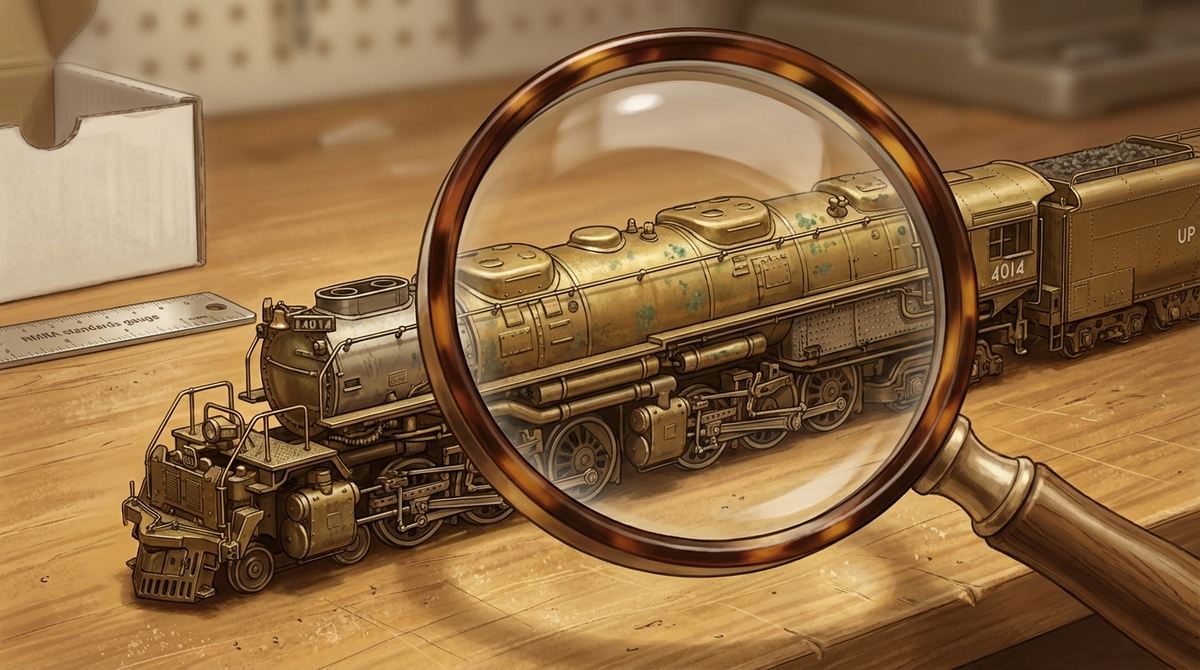
I spent three weeks hunting for a Broadway Limited Mikado last spring. By the time I found one, I'd learned more about the HO steam market than I ever wanted to know. The experience reminded me of my day job in trucking logistics: scarcity drives behavior, and the prepared buyer wins.
If you're looking at HO scale steam locomotives for sale right now, you're entering a market that rewards planning and punishes impulse buying. The days of walking into a hobby shop and picking a locomotive off the shelf are mostly gone for premium models. Let me walk you through what I've learned.
Here's the reality that caught me off guard: the best HO steam models often sell out before they even ship. Broadway Limited's 2025 UP Big Boy, priced at $849.99, had its pre-order slots exhausted at major retailers within days of the order deadline. This isn't unusual. It's the new normal.
Manufacturers like BLI and Rapido Trains now operate on batch production with lead times stretching 12-24 months. The newly tooled SP GS-4 announced for 2025 won't arrive until May 2026. If you want it, you need to order before October 30, 2025. After that? Good luck on the secondary market.
This shift effectively transfers production risk to buyers. You're putting down deposits on models that might arrive eight to fourteen months later. About 31% of 2024's reserved models slipped by over six months. My advice: use credit cards with purchase protection for these long-lead orders, and negotiate refundable deposits where possible.
The HO steam market breaks into four distinct price bands, each serving different types of modelers. Knowing which tier fits your needs saves money and frustration.
This tier is dominated by entry-level models and older production runs. Bachmann's non-sound 0-6-0 switchers live here, typically running $95-$125. They're not going to win any detail contests, but the newer "DCC on Board" versions run reliably.
I picked up a Bachmann USRA 0-6-0 for yard switching duties on my Milwaukee Road layout. It's light on pulling power, but for shuffling cars around Minneapolis, it does the job. Just be aware that older runs can suffer from cracked frames or poor electrical pickup.
This is where I spend most of my locomotive budget. This tier represents only 17% of new HO steam offerings from retailers like Walthers and TrainWorld, yet 34% of eBay completed sales fall here. That gap tells you something: operators want workhorse models at reasonable prices, and the market isn't fully serving them.
My top pick in this range is the Athearn RTR Old Time 2-6-0 Mogul with DCC and Sound at around $310. Based on proven MDC/Roundhouse tooling, Athearn upgraded the drive with a 5-pole motor and flywheels. The SoundTraxx Econami decoder provides solid sound, and the locomotive actually pulls. An 18" minimum radius makes it suitable for most home layouts.
The Bachmann 2-8-0 Consolidation with DCC Sound Value also deserves consideration. It was Model Railroader's product of the year back in 1998, and while some older versions had gear issues, current production runs smoothly. BLI's Stealth Series DCC-ready models fall in this range too, offering a premium chassis for those who want to install their own decoder.
This tier is for modelers who want top performance straight out of the box. BLI's USRA Mikado with Paragon4 runs about $400-$550 and represents the current state of the art in sound-equipped RTR steam.
The Paragon4 system is a complete package: exceptional slow-speed control, synchronized smoke, integrated keep-alive capacitor, and the Rolling Thunder subwoofer system. Die-cast construction provides weight and pulling power. For my Milwaukee Road operations, I run a BLI Light Mikado on mainline freights, and it hauls 40+ cars up my 2% grade without complaint.
The WalthersProto USRA 0-8-0 Switcher at around $400-$420 is another strong choice if you need a powerful yard engine. Model Railroader's tests showed it pulling 60+ cars.
This tier includes high-end plastic articulateds, BLI's Brass-Hybrid line, and the vast world of pure brass. New Brass-Hybrids run about $800, combining a hand-built brass body with a reliable die-cast mechanism.
The used brass market is where things get interesting. BrassTrains and Trainz both carry extensive brass inventory. Older PFM or United models can be found for $150-$800, while rare pieces from builders like Boo-Rim or Precision Scale command $1,200 to over $4,000.
Modern brass (post-2000 Korean production) runs beautifully out of the box. Older brass often needs remotoring and regearing to run acceptably. Know what you're buying.
BLI dominates the premium RTR steam market with their Paragon4 system. It's a closed ecosystem featuring dual-mode DCC, synchronized puffing smoke, and the Rolling Thunder subwoofer for room-shaking low-frequency sound.
The built-in GoPack capacitor eliminates stalls on dirty track. Out-of-the-box performance is superb. The tradeoff? Limited upgrade options and reliance on BLI for repairs. For operators who just want things to work, that's an acceptable bargain.
BLI recently brought back their Stealth Series for modelers who prefer to install their own decoders. These DCC-ready models have a 21-pin socket and provide a high-quality chassis at a lower price point.
Bachmann's transformation over the past three decades has been remarkable. The Spectrum series, introduced in 1988, marked a turning point. Though the branding has largely been absorbed into the standard line, the quality improvements persist.
The current Bachmann 2-8-0 is the former Spectrum unit, and it's one of the best-reviewed steam engines in its price range. Modern Bachmann steamers feature can motors, flywheels, and dramatically improved electrical pickup. They're available DC-only, DCC-ready (with 8-pin or 21-pin sockets), or with factory-installed DCC Sound Value decoders.
One caution: older used Bachmann models can still suffer from split axle gears and poor quartering. Target post-2010 production runs.
Athearn's steam offerings range from the ex-MDC Roundhouse Old Time Moguls to the premium Genesis Big Boy and Challenger. The Genesis line features 5-pole skew-wound motors, flywheels, and robust drivetrains.
Athearn has used various sound decoders over the years, including MRC, ESU LokSound, and SoundTraxx Tsunami2. Performance can vary by production run, so research your specific model. Their Challenger earned praise from Model Railroader for tremendous pulling power and smooth performance.
For DCC operators, the decoder determines everything from slow-speed performance to sound quality. Here's how the major players compare:
ESU LokSound 5 offers "Auto Tune" motor calibration and PWM frequencies up to 50 kHz for silent coreless motor operation. It provides 10 simultaneous 16-bit sound channels and can simulate 2, 3, or 4-cylinder engines independently. The LokProgrammer software enables deep customization.
SoundTraxx Tsunami2 features "Dynamic Digital Exhaust" that automatically adjusts chuff volume and intensity based on motor load. This creates remarkably realistic sound behavior without user adjustment.
TCS WOWSteam offers "Audio Assist" voice-guided programming that lets you configure the decoder without memorizing CVs. Their "Chuffinity" algorithm produces non-repetitive exhaust sounds.
BLI's Paragon4 is a closed system, but the integrated approach delivers excellent out-of-the-box performance with built-in capacitor backup and synchronized smoke.
TrainWorld, Walthers, and Model Train Market offer deep inventory of new releases and pre-orders. Return windows typically run 60-90 days, and their direct relationships with manufacturers provide strong buyer protection.
Trainz and BrassTrains specialize in curated used and brass inventory. Trainz is also an MTH/Lionel service station. BrassTrains focuses exclusively on brass with rigorous grading. For high-quality vetted used locomotives, these dealers are superior to general marketplaces.
eBay offers the widest selection but demands buyer expertise. Despite 98% positive seller ratings, an analysis of returns revealed 41% were due to undisclosed mechanical or electrical faults. The eBay Money Back Guarantee provides protection, but preventing problems beats fixing them.
Groups like HO Scale Steam Locomotives (over 11,000 members) offer private sales and trades. Inventory is unpredictable and buyer protection is minimal, but community connections can surface rare pieces.
I've learned the hard way that a systematic inspection upon receiving a used locomotive catches most problems before they become expensive surprises.
Check the original box and foam first. Foam degradation is a major risk for brass models. Crumbling or sticky foam can destroy paint finishes. Document any damage with photos.
Examine detail parts carefully: handrails, piping, valve gear components. Missing or broken parts often indicate rough handling or previous repair attempts.
Use an NMRA standards gauge to check wheel back-to-back spacing (target 0.557" for HO). Wheels out of gauge cause derailments on turnouts.
Place the locomotive on glass and roll it by hand. Smooth rolling indicates proper quartering. A noticeable "hitch" or binding suggests drivers out of quarter, which requires significant repair.
Watch the side rods as you roll the drivers. Any binding or rubbing indicates problems that will worsen with operation.
For DCC locomotives, place them on a programming track first. Never put an unknown locomotive directly on your main layout. Attempt to read CV 8 (Manufacturer ID) and CV 7 (Version). If you can't read these, the decoder may be faulty.
Test all functions: lights, bell, whistle, and other sounds. Cycle through F0-F28 to identify any dead functions.
Cracked axle gears, severely out-of-quarter drivers, non-responsive decoders, or significant undisclosed cosmetic damage all justify returns under "not as described" policies. Don't try to fix someone else's undisclosed problems.
If you make one upgrade to your steam locomotives, make it a keep-alive capacitor. This single modification offers the highest return on investment for operational reliability.
In testing, a $34 ESU PowerPack Mini installed in a Bachmann 2-10-0 reduced sound and motor dropouts over insulated frogs by 96%. The locomotive achieved stable crawl speeds of 1 scale mph. That same upgrade boosted the locomotive's resale value by $55.
Options include ESU PowerPack, SoundTraxx CurrentKeeper, and TCS Keep-Alive. Installation requires basic soldering to the decoder or motherboard. For the $25-$40 investment, you get dramatically improved reliability on all but the cleanest track.
BLI's Paragon4 locomotives already include a built-in GoPack capacitor, which is one reason they run so well out of the box.
Buying Rivarossi or Hornby locomotives opens access to unique prototypes, but introduces compatibility risks that American modelers often overlook.
European NEM wheel profiles typically feature deeper flanges than NMRA RP-25 specification. In testing, locomotives with European NEM-profile wheels (14.4mm back-to-back) derailed in 73% of tests on Code 70 turnouts. Re-gauging the wheelsets to NMRA S-4.2 specifications (14.15mm to 14.38mm) resolved 100% of these derailments.
European couplers are typically hook-and-loop style in NEM 362 pockets, incompatible with Kadee-style knuckle couplers. Most modern European models accept drop-in Kadee conversions.
Avoid Märklin 3-rail AC models unless you're prepared for complex conversion. Their non-insulated wheelsets will instantly short-circuit 2-rail DC/DCC track. Trix is Märklin's 2-rail DC compatible brand and runs fine on American track.
If you're selling HO steam locomotives, professional presentation maximizes price and minimizes disputes.
The Train Collectors Association grading scale is the most widely recognized standard. C-8 (Like New) allows light use signs but no rust or missing parts. C-7 (Excellent) allows minute scratches but no rust. Disclose every flaw in your listing description.
Shoot against neutral backgrounds with diffused lighting. Include profile views of both sides, 3/4 views from front and rear, top-down and underframe views, close-ups of the cab and valve gear, and clear documentation of any defects.
Shipping damage data from dealers shows a 4.8% damage rate for high-value locomotives shipped in a single box, compared to just 0.7% when double-boxed with 3 inches of clearance. Secure the locomotive in its original box (or wrap in archival paper and bubble wrap), place that inside a larger box with cushioning, then place that inside a double-wall shipping box with another 3 inches of cushioning.
For items valued over $500, purchase full declared-value insurance. USPS Registered Mail offers security and insurance up to $50,000 for extremely valuable pieces.
Manufacturer marketing materials tell you what companies want you to believe. Community discussions tell you what actually happens.
Trains.com Forums (Model Railroader) contains decades of archived discussions on specific prototypes, manufacturer reputations, and complex repairs. Reddit's r/modeltrains offers quick answers and broad consensus on topics like starter locomotives and YouTube reviewer recommendations.
For video reviews with actual performance data, jlwii2000 (James Wright) provides rigorous testing including drawbar pull measurements and slow-speed tests. His Rivarossi Allegheny review exemplifies the data-driven approach serious buyers need.
Model Railroader's staff reviews remain the industry benchmark, providing measured data on drawbar pull, scale speed at various voltages, and DCC performance. Their Athearn 2-8-0 review found it could pull 44 standard freight cars and achieve a low speed of 0.2 scale mph.
Always cross-reference community advice with official NMRA standards. Consult S-4.2 for wheel dimensions, RP-25 for wheel contour, and RP-11 for minimum radius recommendations. An NMRA standards gauge is essential equipment for any serious modeler.
After years of hunting for Milwaukee Road steam to run my 1970s-era layout (yes, I know steam was mostly gone by then, but I model the 1950s on an adjacent staging yard), I've developed a simple buying philosophy: prioritize operational reliability over collecting prestige.
The locomotive that runs flawlessly session after session is worth more than the museum-quality piece that needs constant attention. Factory-installed sound and DCC commands a premium on resale because operators value convenience. A keep-alive capacitor transforms an average performer into a reliable one.
Pre-order the locomotives you know you need. The secondary market for sold-out releases is unforgiving. Budget for the $200-$400 sweet spot for your workhorse fleet, and save the premium dollar for that one special model that defines your railroad.
Most importantly, test everything before the return window closes. The 15 minutes you spend on inspection saves hours of frustration and repair bills down the road.
? Complete Your Layout: Explore our wide selection of Photo Real buildings, diorama backdrops, detail parts, and accessories in every popular scale.
✨ Unmatched Realism: From chrome detailing products to neon lighting kits – every piece is designed to make your miniature world come alive.