
Getting Kids Interested in Model Trains: A Practical Guide for Parents and Mentors
Posted by Tamara Brooks on 13th Feb 2026
Order by phone: 763-231-7847
Free Shipping On Orders Over $100!
If you are already registered, please log in.
Create your account and enjoy a new shopping experience.
Create A New AccountPosted by Tamara Brooks on 13th Feb 2026
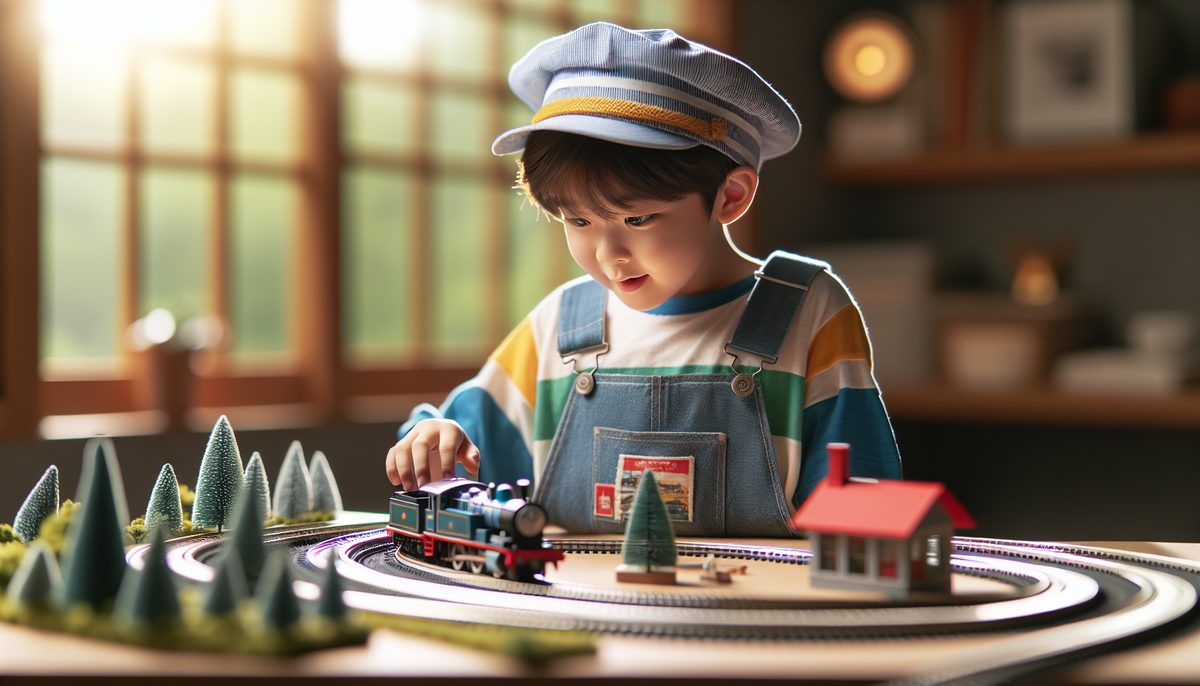
I bought my first model train because my eight-year-old nephew asked what my 3D printer could make for his birthday. Three years later, he's scratch-building his own freight cars and teaching me about prototype paint schemes. That's the thing about getting kids interested in model trains: when you do it right, you're not just handing them a toy. You're handing them a gateway into engineering, art, history, and the kind of problem-solving that no video game can replicate.
But here's what nobody tells you: most families who buy a starter set at Christmas never touch it again by February. The train goes back in the box, and another potential modeler drifts away. I've watched it happen too many times. The good news? It doesn't have to be that way.
Before we talk gear, let's talk payoff. I'm an engineer by training, so I need data before I'll recommend anything. And the data on hands-on construction play is genuinely impressive.
A 2020 meta-analysis of spatial skills training found that early intervention (ages 0-8) yields an average effect size of Hedges's g = 0.96. If you're not a stats person, that means kids who do this kind of play improve by nearly a full standard deviation compared to control groups. That's massive. The research specifically highlights how classroom-based spatial training (g = 1.16) outperforms lab-based training, which tells us something: integrated, real-world building activities work better than isolated exercises.
What does this look like in practice? When a kid assembles track, they're engaging multiple spatial skill categories: understanding how parts fit together, visualizing the layout from different angles, mentally rotating pieces to make them connect. These are the exact skills that predict success in STEM fields.
And then there's fine motor development. The precise movements needed to handle small components, paint details, and manipulate couplers strengthen the same muscles kids need for writing. Studies using LEGO-based interventions have shown statistically significant improvements in hand-eye coordination and grip strength. Model railroading involves all the same actions, often with smaller parts.
I'm not here to trash other hobbies. My nephew also flies drones. But when parents ask me where to invest their STEM budget, I point them toward the comparison that matters.
Educational robotics have a moderate impact on overall learning outcomes, with an effect size around 0.46. That's solid, but it's half what spatial training delivers. Coding education boosts computational thinking, but its broader impact can be limited.
Model railroading does something different: it integrates physics, electrical engineering, history, artistic scenery building, and digital automation into one package. A kid who sticks with the hobby will learn to solder, program DCC decoders, research prototype operations, and build realistic landscapes. That breadth is hard to match.
Entry costs are comparable too. A quality HO DCC starter set runs around $430, roughly what you'd pay for a comprehensive robotics kit.
The single biggest mistake I see parents make? Buying an HO scale starter set for a four-year-old, watching the kid break a coupler within ten minutes, and concluding that trains "aren't for us."
That's not a kid problem. That's an age-matching problem.
Attention spans vary predictably by age. A two-year-old has 4-6 minutes of focus. An eight-year-old can sustain 16-30 minutes. A mismatched activity leads to frustration, not engagement.
At this stage, you want durable, safe, frustration-free play. Two-year-olds are just learning to sort shapes and follow simple instructions. BRIO, Thomas Wooden Railway, and LEGO DUPLO are ideal. No electricity, no small parts, no problems.
The CPSC's age determination guidelines exist for good reasons. Kids this age put things in their mouths. Keep the choking hazards away.
By five, kids can follow rules and complete simple chores. Their attention spans stretch to 12-18 minutes. Battery-operated sets like Lionel Ready-to-Play or Hornby Playtrains work well here. Remote control operation adds engagement without requiring the fine motor skills for true model railroad operation.
Supervise battery installation, and choose sets with secure compartments. This is play time, not engineering class.
Now we're cooking. Children at this age can handle realistic play and manage sets with many parts. The CPSC recommends age 8+ for electric toys, and I agree.
This is when you introduce Bachmann HO sets, Lionel O-Gauge LionChief, or similar products. Adult supervision for power pack connection remains mandatory. But kids can now handle track setup, basic wiring concepts, and simple structure kits.
Fine motor skills are refined enough for more precision work. Complex instructions are manageable. I introduced my nephew to soldering at 12, with direct one-on-one supervision, proper PPE, and a non-flammable work surface.
Basic soldering safety rules apply: goggles, excellent ventilation, and constant adult presence. Hobby knives enter the toolkit here too, with proper instruction on cutting techniques and safety.
Teenagers can work at near-adult levels. Advanced DCC programming, airbrushing, scratch-building. The NMRA safety guidelines still apply, especially regarding ventilation for paints and solvents. But the training wheels are essentially off.
I'm going to be blunt: some starter sets are better investments than others. Here's what I recommend based on current pricing and reliability.
The Lionel Polar Express LionChief 5.0 remains the gold standard for family entry. Movie sounds, smoke, voice control, Bluetooth app operation. Street price runs $480-$550. It's expensive, but it works out of the box every time.
For something less theme-specific, the Lionel Santa Fe Super Chief offers the same technology in a classic railroad livery.
The Bachmann Chattanooga at around $225 gives you a 155-piece set including scenery accessories. If you want DCC right away, the Bachmann Digital Commander at $430 includes two DCC-equipped locomotives for immediate multi-train operation.
The difference matters: DCC lets you run multiple trains independently on the same track. That's where operations become genuinely interesting.
The Kato Santa Fe Super Chief Starter Set runs $250-280 and delivers exceptional quality in a compact footprint. Kato's Unitrack system is, in my experience, the most reliable sectional track on the market. Period.
If space is tight or you want flawless operation, N-scale with Kato is where I'd start.
Track is the foundation of everything. Bad track means derailments, which means frustrated kids, which means trains going back in the box. Don't cheap out here.
The Kato Unitrack system uses patented "Unijoiners" that snap together with reliable electrical and mechanical connections. Setup feels like playing with blocks. I've torn down and reassembled layouts dozens of times with zero degradation. For N and HO, this is my top recommendation for family use.
Bachmann E-Z Track is designed for quick assembly on floors and carpets. One critical distinction: the nickel-silver rail version conducts electricity far better than the steel alloy option. Steel track requires more cleaning and can rust in damp environments. Spend the extra money for nickel-silver.
Lionel FasTrack for O-gauge snaps together with a strong positive-locking mechanism. It's durable enough for carpet layouts and handles repeated assembly and disassembly. The trade-off: it's one of the louder track systems due to its hollow roadbed design. But for under-the-tree Christmas setups, durability matters more than acoustics.
For European modelers (or those using the 3-rail AC system), Märklin C Track offers excellent plug-in connections and prototypical appearance. The "Click" connection is sturdy and electrically reliable. Just understand that Märklin's 3-rail system is fundamentally incompatible with standard 2-rail equipment.
Atlas Snap-Track uses traditional metal rail joiners without integrated roadbed. It requires separate cork or foam and ballasting for realism. Setup is slower, and joiners can develop gaps with repeated use. I'd reserve this for more permanent layouts where you're willing to ballast properly.
The train around the Christmas tree is a tradition for good reason. It creates powerful positive associations. The key is converting that seasonal enthusiasm into year-round engagement.
The most common failure point? Unstable track base. Running track directly on plush carpet or bunched-up tree skirts causes derailments. A simple sheet of plywood or hardboard under the tree skirt creates the firm, level surface you need.
Combining the train with a miniature village (Department 56, Lemax) elevates the display from a simple loop to an immersive world that encourages storytelling.
Here's where most families drop the ball. The decorations come down, and the train gets packed away with them.
Instead, try a "de-seasonalizing" project. Replace the holiday-themed car with a generic boxcar or gondola. Swap artificial snow for a basic grass mat. Add a few non-seasonal structure kits.
This transforms the layout from a temporary decoration into a permanent miniature world. It also introduces new skills at exactly the right moment: when the novelty is fading but the interest remains.
Proper care ensures the tradition continues. Before storage, clean locomotive wheels and track rails to remove dust and oxidation. Apply manufacturer-recommended lubricant to gears.
Store trains in sturdy plastic containers with foam inserts rather than original packaging, which gets damaged with repeated use. Keep everything in a climate-controlled space. Attics and garages with temperature swings will warp plastic and corrode metal.
This is my wheelhouse, so let me share what worked for me. Kids today are digital natives. Fighting that is pointless. Embrace it.
My entry point was 3D printing, and it's become my primary recruiting tool for young modelers. Free, web-based CAD software like Autodesk Tinkercad is designed for beginners and works great for K-12 education.
For hardware, entry-level FDM printers like the Creality Ender-3 V3 (around $219) are affordable and beginner-friendly. Use PLA filament, which is plant-based with low emissions and perfectly safe for beginners.
For highly detailed parts, resin printers like the Anycubic Photon Mono 2 (under $300) produce incredible results. But resin requires strict safety protocols: gloves, masks, excellent ventilation. This is 14+ territory with adult supervision.
Project files? Thingiverse hosts thousands of free HO scale models. The OpenRailway Project offers complete O-scale compatible trains and track.
If your kid already builds with LEGO, you're halfway there. Adapting LEGO Powered Up systems to control traditional trains creates an immediate connection between familiar play patterns and scale modeling.
Custom LEGO bodies can be mounted on standard HO or O-gauge trucks. This introduces scale and prototype design while using a medium the kid already knows.
The PFx Brick from FX Bricks adds advanced sound and light control to LEGO trains, bridging toward DCC-like functionality.
For kids who love RC cars, dead rail systems are a natural fit. On-board battery power and radio control eliminate the need for electrically powered track entirely.
This appeals to tinkerers because it involves integrating LiPo batteries, electronic speed controllers, and 2.4GHz receivers into locomotives. It solves the dirty-track problem that frustrates so many beginners. Commercial systems from Tam Valley Depot and others offer plug-and-play solutions, while DIY approaches allow endless experimentation.
Building an inclusive hobby isn't just ethical. It's practical if we want model railroading to grow.
For children with autism or sensory processing disorders, standard train shows can be overwhelming. The B&O Railroad Museum's "Sensory Sundays" program features no music and low lighting. The Brandywine Railroad's sensory-friendly events create calmer visual environments.
For home layouts, this translates to: reduce sound decoder volume, avoid flickering lighting effects, and designate quiet zones away from the main layout. Offering noise-canceling headphones during operating sessions costs almost nothing and makes a huge difference.
ADA standards recommend table heights of 28-34 inches for wheelchair accessibility. T-TRAK modular standards, designed for standard banquet tables, are naturally more accessible.
For club layouts, ADA requires minimum 36-inch clear width for accessible routes and 60-inch diameter for wheelchair turning. Plan for this from the start rather than retrofitting.
Modern DCC throttles offer various interfaces. Software-based throttles on tablets allow large, customizable interfaces. Some support external game controllers (Xbox, PlayStation), providing familiar and physically accessible control methods.
The perceived cost barrier stops many families. But smart sourcing and a repair mindset dramatically reduce lifecycle costs.
Train shows, swap meets, and reputable online communities are excellent sources for quality used equipment at a fraction of original cost. This isn't settling for inferior products. Vintage trains were often built to higher standards than modern budget offerings.
Learning basic maintenance extends equipment life enormously. Manufacturers like Bachmann offer spare parts. Community forums provide repair knowledge freely.
Cleaning track and wheels, lubricating gears, replacing worn pickup wipers: these simple tasks keep locomotives running for decades.
Indoor VOC levels run 2-5 times higher than outdoors. Choose water-based acrylic paints and PVA glues over solvent-based products. Work in well-ventilated areas.
Recycled XPS foam from packaging makes excellent terrain. Household items like cardboard and aluminum foil become creative scenery materials. This isn't just environmental responsibility; it's teaching kids resourcefulness.
You want sustained interest, not forced participation. The goal is fostering intrinsic motivation, not creating another chore.
Track session frequency and duration with a simple log. How often does the kid choose to work on trains? For how long? Trends over time tell you more than any single session.
Self-initiated versus prompted activity is the critical ratio. A high rate of kid-initiated sessions indicates genuine passion. If you're always the one suggesting trains, something needs to change.
Encourage documentation without making it homework. Engineering notebook templates from educational resources can be adapted for layout plans, wiring diagrams, and scenery ideas. TeachEngineering's design process resources provide frameworks that feel purposeful rather than punitive.
For specific projects, simple STEM rubrics help kids understand goals and self-assess. Criteria like creativity, planning, and problem-solving create structure without rigidity.
Rotate responsibilities. One week the kid is "Chief Scenery Officer," the next they're "Lead Electrical Engineer." This maintains novelty and lets them explore different aspects at their own pace. For older kids, validated engagement surveys can open dialogue about what they find most rewarding.
Isolation kills hobbies. Community sustains them.
The Train Collectors Association offers free Kids Club and Teens Club memberships, including free admission to the National Toy Train Museum. They actively support various train types, including LEGO.
The NMRA has strict youth protection policies requiring parental supervision, but many local divisions run "Make & Take" clinics at shows. Model Railroad School programs provide structured learning opportunities.
4-H clubs like the Somerset Trainmasters use model railroading to teach carpentry, wiring, and teamwork.
The National Toy Train Museum in Strasburg, PA features seven interactive operating layouts across multiple scales, including LEGO. Kids can run the trains themselves via interactive buttons.
The Railroad Museum of Pennsylvania offers day-long Railroading Merit Badge Workshops for scouts, plus summer camps and Model Railroading Days.
The California State Railroad Museum provides free self-guided field trips for California K-12 school groups and Home School Activity Days. They're also KultureCity certified for sensory-inclusive access.
Across the Atlantic, the National Railway Museum in York offers free admission and features "Wonderlab," an interactive gallery with 18 hands-on exhibits exploring railway science.
The Great Train Show circuit is explicitly family-friendly, with free admission for children, riding trains, and free modeling workshops.
Trainfest in Milwaukee (November 1-2, 2025) features 50+ operating layouts, a free riding train for kids, and make-and-take clinics.
The Amherst Railway Society Railroad Hobby Show (January 24-25, 2026) is America's largest railroad-themed trade show, with free admission for children 15 and under.
I'm not going to sugarcoat this: the hobby involves tools, chemicals, and electrical systems that require respect.
Under 8: the hazards are choking on small parts and ingesting magnets. High-powered magnets should be kept out entirely; ingestion causes severe internal injuries.
Ages 8-12: Low-temperature hot glue guns, screwdrivers, and pliers with one-on-one supervision. The manufacturer documentation for your specific equipment provides guidance.
Ages 11-14+: Soldering and hobby knives with proven maturity and close supervision. ASTM F963 toy safety specifications don't cover hobby kits where "the finished item is not primarily of play value." That puts greater responsibility on you as the supervising adult.
Always work in well-ventilated areas when using paints, glues, or solvents. Water-based acrylics and PVA glues are generally safe. Solvent-based products require real caution.
Safety glasses for cutting, soldering, or painting. Nitrile gloves for handling solvents and paints. For airbrushing, a cartridge-type respirator and spray booth exhausting outside.
Model railroad power packs are low-voltage (typically 12V-18V DC) and generally safe. Ensure they're UL-listed Class 2 power units. Never use frayed cords. Unplug when not in use.
For DCC layouts, proper wire gauge and short-circuit protection through circuit breakers protect both equipment and operators. The NMRA's DCC resources explain the technical requirements.
If you're buying internationally or considering different systems, understand the fundamental incompatibilities.
HO scale (1:87) is the global standard in North America and Continental Europe. OO scale (1:76.2) is the UK standard. They run on the same 16.5mm track gauge, but the models are noticeably different sizes. Mixing them looks wrong.
The 2-rail DC/DCC versus 3-rail AC divide is fundamental. Märklin's 3-rail system is incompatible with everything else. A 2-rail locomotive will cause a short circuit on 3-rail track. Choose one system and commit.
Coupler standards also vary by region. North American knuckle couplers (Kadee-style) differ from UK tension-lock couplers and the various Continental European proprietary systems. NEM 362 standard coupler pockets provide some path to compatibility in Europe, but be aware of what you're getting into.
For a North American family starting fresh? A standard 2-rail DC or DCC HO scale set offers the widest product variety and clearest upgrade path.
My nephew just turned eleven. Last weekend, he spent four hours designing a custom coal load for a hopper car in Tinkercad, printed it, painted it, weathered it, and loaded it into a train. He didn't ask for permission or help. He just did it because he wanted to see if he could.
That's what this hobby offers: a space where kids can develop genuine competence at something difficult and rewarding. Where they can fail, iterate, and eventually succeed on their own terms. Where the skills they build transfer directly to academics and careers.
The NMRA Beginner's Guide will get you started with the technical details. Model Railroader magazine has decades of accumulated wisdom. Model Railroad Hobbyist is free and digital-first. YouTube channels like Sam'sTrains and Luke Towan provide visual tutorials.
But the real work happens at home, on the floor, around the Christmas tree, in the basement. It happens one project at a time, one age-appropriate step at a time, until the day you realize the kid doesn't need you anymore.
That's when you know you've succeeded.
✨ Complete Your Layout: Explore our wide selection of Photo Real buildings, diorama backdrops, detail parts, and accessories in every popular scale.
✨ Unmatched Realism: From chrome detailing products to neon lighting kits – every piece is designed to make your miniature world come alive.